Sunday, August 26, 2007

SH Contemporary 07

Coming up!


U-TURN: 30 Years of Contemporary Art in China

Watch out ! Terrific compilation in the making.

Summer Music Conference 2007 today

Summer Music Conference 2007
http://www.urbanon.com/

Shanghai's Innaugural Summer Music Conference (SMC) takes place over 3 days, August 24, 25, 26 2007 at Dino Beach Waterpark Summerstage.

The SMC is a platform for local and independent bands, musicians, DJs, crews and artists to connect with each other, with music industry representatives, and of course with the audience and fans.

3 days, 2 stages, 1 big event!

The format of the SMC allows for varieties of musical styles to be heard at any given time. SMC is spread over 2 stages with independent performances from many styles and genres.

Dozens of Live Rock, Hip Hop, Electro and Drum n Bass DJs will alternate over the 2 stages throughout the 3 day event ensuring that diverse yet complimentary styles of music that is representative of the current local music scene are heard throughout the day and night.

Check this thread for more information, including full lineup of performers, hours, ticketing and other details... Also, musicians, DJs, promoters, performers, please check back for details on how you can be part of this yearly event!

A Gift Offer for Artists in China: Museums

http://www.nytimes.com/2007/08/25/arts/design/25muse.html

A Gift Offer for Artists in China: Museums
Xiao Quan

Eight contemporary Chinese artists have been offered their own personal
museums in Dujiangyan, in Sichuan Province. The city plans to begin
construction on an 18-acre plot of land soon.

By DAVID BARBOZA
Published: August 25, 2007

SHANGHAI, Aug. 24 — For years their work could not be exhibited in
China, but now the country's leading contemporary artists are being
courted by major art collectors abroad and their paintings set records
at international auction sales. A local government in Sichuan Province
— the area in western China known for its natural beauty, spicy food
and talented painters — is taking notice.
Skip to next paragraph
Chang W. Lee/The New York Times

Zhang Xiaogang is one of eight artists who have been offered their own
museums as contemporary art flourishes in China.
The New York Times

Sichaun Province is known for its spicy food and, now, its art.

It has offered to give eight contemporary artists, all under 60, their
own personal museums to operate. The group includes some of China's
best-known avant-garde artists: Zhang Xiaogang, Wang Guangyi, Fang
Lijun, Yue Minjun, Zhou Chunya, He Duoling, Zhang Peili and Wu
Shanzhuan. All have accepted, and Dujiangyan, a city near the
provincial capital, Chengdu, will soon begin construction on an 18-acre
plot of land. The museums are scheduled to open in October 2008.

In a country with no major museum of contemporary art — not even in
Beijing, where most of the eight artists work — this is a novel
development. But in China, everything is changing at warp speed:
artists who sold works for $100 in the 1990s have become
multimillionaires operating huge studios and driving BMWs. They are
helping to transform the style of the country's biggest cities.

"Modern art used to be neglected," said Lu Peng, an associate professor
at the China Academy of Art in Hangzhou, who selected the artists.
"Then modern art became popular in the market."

The new project, which will also include a public museum, is expected
to bolster tourism and to benefit a group of real estate companies that
are redeveloping the provincial area. In addition to providing the
land, Dujiangyan's government is investing around $13 million in the
museums.

The eight artists, ranging in age from 42 to 59, include a few from
Sichuan, but the others come from all over China. They rose to
prominence in the late 1980s and early 1990s by producing paintings,
installations and multimedia pieces that were often radical. Some of
the work was viewed by the Chinese government as distasteful or
antiauthoritarian.

But in recent years Beijing has significantly loosened restrictions on
what can be exhibited in China as the global art market has fed a boom
in new studios, galleries, museums and art districts in many of its
cities. Today only the most controversial works — those with explicit
sexual images or harsh depictions of high-ranking Communist Party
officials — are banned.

How the artists plan to operate their own museums remains unclear.

"I was very happy when I heard that they were going to give me my own
museum," said Mr. Wu, 47, whose radical red character paintings and
nude performance art are well known here and abroad. "Right now, I have
no idea what I'm going to do with it. In the future all the artists
will sit down and discuss how these museums will be operated."

If the artists choose to display their own works, the museums will have
an enviable collection. Prices for art from many of them have
skyrocketed on the auction market. Individual pieces by Zhang Xiaogang
and Mr. Yue, for example, have sold for more than $2 million.

Friday, August 24, 2007

The Fusion on the Menu Is Art and Food

Asia > China > Beijing
The Fusion on the Menu Is Art and Food
By JULIA CHAPLIN
Published: August 19, 2007

IT was a familiar art-world ritual. Mint BMWs and Audis snaked down a
dark alley off the Second Ring Road in Beijing and pulled up to a gray
industrial bunker. Samuel Keller, the director of Art Basel Miami
Beach, had just jetted in from Switzerland. The local hotshot painters
Liu Ding and Liu Wei were huddled with the Svengali-esque curator Pi
Li, and in one corner would-be collectors were chatting with one of
China's most renowned contemporary artists, Ai Weiwei.

Insiders could be forgiven for mistaking this as yet another gallery
opening in art-crazed Beijing, with free-flowing Yen Jing beers, an
international crowd and a minimalist interior of stark white walls and
bare concrete floors. But then the kitchen doors swung open, and a
banquet of Zhejiang province dishes like steam-dried yellow croaker and
a wild-mushroom casserole in a fragrant broth poured forth.

The place was Qu Nar, a restaurant owned and designed by Mr. Ai as a
kind of dining club for his creative circle. "The restaurant actually
loses money because we don't promote it," said Mr. Ai, who opened Qu
Nar (16 Dongsanhuan Bei Road, Chaoyang; 86-10-6508-1597) in 2005 with
several bohemian friends. "But it's worth it because now we have a
place to hang out."

Mr. Ai is among a growing number of Beijing artists who are stepping
outside their studios and into the kitchen to open some of the most
talked-about restaurants in the city. These
artists-turned-restaurateurs are introducing cuisine from their
ancestral provinces — albeit with a nouvelle twist — to a city where
local Mandarin cooking has had a lock on upscale dining.

The current market for Chinese art has turned a handful of struggling
artists into overnight multimillionaires, with their works commanding
as much as $2.3 million at auction houses like Christie's. Along with
their newfound fame, some of these Beijing artists are now rolling in
the materialist trappings of a rap star, with their Range Rovers,
Ferragamo suits and, now, their own cult-of-personality restaurants.

That's not to say these places don't serve a more communal function. As
new art districts pop up along the industrial outskirts and dirt-road
villages off the Fifth Ring Road — often with no discernible center —
the restaurants have also emerged as a kind of ad hoc salon.

At the Dashanzi arts complex, housed in a defunct military factory near
the airport, artists and dealers can be found during lunch at Tian Xia
Yan (4 Jiuxianqiao Lu, 798 Factory District, Dashanzi;
86-10-6432-3577), a casual Sichuan cafe opened five years ago by the
photographer Cang Xin, known for his provocative self-portraits. Tucked
in a back alley behind a maze of galleries, boutiques and coffee shops,
the homey cafe has a red, Cultural Revolution-style décor and serves
Sichuan standards like spicy tea-mushroom pork pot and red-hot sesame
noodles.

By far the most entrepreneurial of the new artist-cum-restaurateurs is
Fang Lijun, a cynical-realist painter known for his canvases of eerie
bald men floating in space. Mr. Fang opened six upscale restaurants
around the city, each displaying important artworks that Mr. Fang and
his curator friends pick.

"It's a business, but it's also a place for the art world to meet and
gather," said Mr. Fang, who can often be seen holding court at Yuelu
Montain's Qian Hai Branch (10 Lotus Lane, 51-10 Dianmen Xidajie,
Xicheng District; 86-10-6617-2696).

Mr. Fang's flagship — South Silk Road in Soho New Town (3/F, Building
D, 88 Jianguolu Road; 86-10-8580-4286) — is the Beijing art world
equivalent to the Ivy in Los Angeles, where power curators and
collectors from Hong Kong, Seoul and the West wine and dine with the
art elite. Set on an upper floor of an office tower, the room is a
soaring loftlike space with black lacquered furniture and chic
waitresses in brightly colored folk outfits.

On one wall, behind a banquet table for 18 people, is a
floor-to-ceiling painting by the leading artist Wang Guangyi that
depicts, in pop yellow and red, retro-Communist workers with the word
"art" stamped in the corner like a corporate logo.

Viewing the painting on a winter afternoon was Meg Maggio, the director
of the Pekin Fine Arts gallery and a consultant for the Gagosian
galleries. "China is a country where relationships are best built over
a good meal," Ms. Maggio said, as she entertained a museum group over
glasses of rice wine and dishes like caterpillar fungus chicken soup in
steam pot, made with four varieties of Yunnan mushrooms.

Three years ago, an artist collective from Guizhou — a poor province in
south central China — arrived in Beijing to sell their paintings. To
pay the bills and to keep from getting homesick, they opened a 24-hour
restaurant named after themselves, Three Guizhou Men (1-2/F, Building
7, Jianwai SOHO, 39 Dongsanhuan; 86-10-5869-0598). The sleek gray
dining room served nouvelle Guizhou specialties like sour fish soup,
lavender tea with milk, and mango and ice purée.

Their art careers never took off, but their restaurant now has five
branches. And they are always packed

Thursday, August 02, 2007

this is pretty good.

http://www.nytimes.com/2007/08/01/world/asia/01china.html?em&ex=1186113600&en=997c932a7b0a82b9&ei=5087%0A

Wednesday, July 18, 2007

Chinese copy-painters come to Zurich

http://www.artworldsalon.com/blog/2007/07/16/chinese-copy-painters-

come-to-zurich/

Chinese copy-painters come to Zurich
Monday July 16, 2007 | 13:10 by Marc Spiegler | permalink

The art scene is slow in Zurich this time of year, like everywhere
else. But there's always room for a little controversy. Last weekend's
concerned the newly established Splügen-Gallery (all text in German),
where the business model runs thus: You give them an image of an
artwork, and they have it painted for you in Shenzhen Dafen, China, at
whatever dimensions you like. The cost? Roughly $450-$900, frame
included.

The eclectic first show features works "by" Gustav Klimt, Roy
Lichtenstein and Tamara de Lempicka. Naturally, Pro Litteris, the Swiss
artists-rights association, objects strongly, arguing that "to
reproduce an image you need permission from the artist or their
representative." The gallery's owner, Chris Rüegg, counters that he's
checked with his lawyers and it's all perfectly legal.

One thing's sure: Given the predicted vector of the Chinese
contemporary-art scene, Splügen customers might do well to inquire
precisely who painted their duped Picasso, Prince, Weischer, or Wool,
and keep that name in their bank vault. After all, Western art history
is full of people who went from doing commercial art to being canonized
artists. Just look at the recent prices for Warhol sketches from his
illustrator days.

The problem with a collector-driven market

The problem with a collector-driven market
链接
By Jane Kallir |
Posted 12 July 2007

For the past century or so, the art world has been supported by four principal pillars: artists, collectors, dealers and the art-historical establishment (critics, academics, and curators). From a wider historical perspective, the latter two entities are relative newcomers. The development of art history as an academic discipline, and of public museums, dates back only to the 19th century. Only in the 20th century did dealers evolve from passive shopkeepers to pro-active impresarios, promoting the often difficult efforts of the pioneering modernists with missionary zeal. Public resistance to modernism, coupled with the pressures of international capitalism, gave new importance to dealers and museums, both of which played key roles by superintending the distribution of new art and ratifying its seriousness. At varying points in the course of the past 100 years, the weight of the art world has shifted from one of the four pillars to another. Artists made the modernist revolution; dealers recognised and supported it before academia did; in the post-war period, critics became so dominant that Tom Wolfe lampooned their influence in his 1975 book The Painted Word. And now, it seems, collectors have taken charge.

Over the long term, art-historical value is determined by consensus among all four art-world pillars. When any one of the four entities assume disproportionate power, there is a danger that this entity’s personal preferences will cloud everyone’s short-term judgement. Put bluntly, the danger of a collector-driven art world is that money will trump knowledge. Great collectors should ideally become nearly as knowledgeable as the curators and dealers who help them build their collections. But not all of today’s collectors have the passion or the time necessary to develop this depth of knowledge. Collecting, once the pursuit of a relatively small number of driven individuals, has become far more common among far more people.

This expansion of the art market, made possible by the broader dissemination of concentrated pockets of wealth and by the globalisation of art and related information, has drawn in players who do not have the focused commitment of the traditional collector. The exponential growth of the market, and the genuine gains realised by those who got in early, inevitably fuel the tendency, justifiable or not, to view art as an asset class comparable to stocks or real estate.

Art has also become the greatest common denominator in the new global social order. Today’s rich are an international elite whose members can measure their cachet by the level of VIP services given them at Art Basel and Art Basel/Miami Beach. Anointed by the glamour that today attends the public display of great wealth, the art world has acquired the patina of trendiness that was formerly exclusive to the entertainment and fashion industries. The contemporary focus on trendiness and investment potential, each of which operates on a relatively short timeline, obscures the fact that lasting value in art accrues in the course of generations.

The corollary to a collector-driven art world is that the canon of ostensibly great artists is being largely determined by market forces. The huge prices that have been achieved lately at the top of the market are the result not only of new concentrations of wealth, but of the fact that many people are pursuing the same handful of artists and works of art. Therefore the drop-off from the peak can be steep, becalming the middle market and consigning lesser works and lesser artists to also-ran status.

This is a market with a voracious appetite for alleged masterpieces, and little patience for historical or developmental nuances. It encourages superficiality: rather than collecting a single artist or group of artists in depth, collectors now often prefer to amass scattered masterworks: here a Matisse, there a Picasso, and then perhaps a Schiele. In an overheated environment, the art-historical establishment often finds itself chasing rather than guiding the market. The press must keep up with the latest trends, and coverage of social events and record prices often takes precedence over quiet critical reflection. Museums need the support of trustees, but the most powerful collectors no longer need the imprimatur of an existing museum; they can simply open their own.

If it sometimes seems that the art-historical establishment is missing in action, this is in part because, while the market has been aggressively constructing a new canon, academia has been busy deconstructing the old one. For several decades now, scholars have generally agreed that the white, male, Eurocentric canon that traditionally dominated Western art evolved from historical biases that are no longer morally or intellectually justifiable. Although this change in orientation has literally opened up a whole new world of aesthetic possibilities, it has discouraged academics from making qualitative judgements. Scholarship in areas that are useful to the marketplace, such as provenance and authenticity, has flourished, but overall connoisseurship has declined. Similarly, market pressures push dealers to become generalists, showcasing a hodge-podge of high-ticket items instead of specialising as they formerly did. Auctioneers, operating within a timeframe that seldom extends much beyond the next sale date, focus most of their energies on the highest priced lots. Novice collectors, justifiably wary and insecure, engage consultants who often know far less than the dealers and auctioneers. At every level of the art world, deeper knowledge and principled guidance seem to be in short supply.

The writer is co-director of Galerie St Etienne in New York

The China Painters by Jankowski

If you missed it!

CHRISTIAN JANKOWSKI: SUPER CLASSICAL

Opening Reception: Saturday, February 24th from 6-9 pm.
Gallery hours: Tuesday through Saturday, ten to six.

For The China Painters, Jankowski traveled to Dafen, a suburb of
Shenzhen, China that operates like a paintings sweatshop. There,
workshops have been for the last twenty years replicating western
masterpieces, primarily for North American and European hotel lobby's,
producing an estimated 60 percent of the world's cheap oil paintings.
An artisan recently told Spiegel Online he "wants to get into the
business of oil paintings the way McDonalds got into the business of
fast food." The Communist Party of China (CCP) has lauded the
painters' economic boom, erecting an art museum in the village center.
This massive modernist building, which Jankowski visited and
photographed, is currently without a director or a collection, despite
its impending grand opening. Jankowski interviewed artisans, asking
what they would choose for the institution to exhibit on the walls;
none of the participants had been to a museum before. They remade his
photographs of the raw museum interior, inserting their fantasy
artworks. The resulting imagery varies from landscapes to family
portraits, to traditional Chinese works and "sexy" paintings; some
impart political criticism, such as Three Leaders, of former Communist
leader Den Xiaoping in conversation with China's current President and
Vice President, or Liberty, a replica of Delacroix's Liberty Leading
the People (1830). Via Jankowski's invitation to participate in his
own artistic practice, he gives the Dafen painters a voice, and
moreover, a challenge to generate an original painting for the first
time. The project confronts professional boundaries, and highlights
the larger issue surrounding modalities of mass production in the
twenty-first century global marketplace.

Tuesday, July 17, 2007

Pride is a Sham(e)!

The reasons are fourfold:

i. Proclamations of pride are compensatory, acknowledgements not only that the larger community regards one’s behavior as shameful, but tacitly that one does as well. Attitudes toward behavior one regards as entirely normative are ambivalent (imagine the absurdity of a heterosexual pride day). Pride and shame exist along one axis, together forming dipoles of the same entity: narcissism. Outwardly projected self-love masks inwardly projected self-loathing. Vocalized pride is pride in sham clothing and receives its identity only from shame.

ii. Gay/straight distinctions now have little or nothing to do with sexual behavior per se. The term "gay" has detached from the referent from which it was formed (a euphemism for people who engage in homosexual acts) and now floats aimlessly through linguistic never-never land. It is not uncommon to hear talk of gay straight guys, straight gay guys, and gay porn stars secretly being "straight" – engaging in homosexual acts is not sufficient, in fact not even necessary, to warrant identification as "gay."

Whether or not any of the following people engage in homosexual acts, I do not know – they are gay, nevertheless:

Richard Simmons

The Smiths
Most male eurotrash

Inanimate Objects, Professions, and Places (which of course, cannot engage in homosexual acts) can indeed be gay as well:

Hermès Gardening Spades
Calvin Klein & 2(x)ist Undergarments
Colors named after the natural objects they resemble: i.e. salmon, camel, …
Interior Decoration
Landscape Architecture
Professional Football
Construction
Law Enforcement
Firefighting
Floristry
Fashion Design
Coiffeury
Versailles
Paris
Milan

To be gay is to embrace a sort of neo-dandyism or to react violently against that (neo-machismo – butch gays are the gayest after all), nothing more, nothing less.

iii. To define is to limit. A homosexual who identiefies as "gay" relegates himself to a series of convenient definitions… a certain socioeconomic status… a certain set of life chances. To do so with pride is to accept one’s rape and then smile and thank the heteronormative power structure responsible.

iv. A “gay” identity undermines a homosexual’s sex chances. The vast majority of homosexuals are only attracted to “straight-acting" homosexuals.

Sunday, July 01, 2007

Shanghai Pride week

Here is the complete schedule of events for Shanghai Pride:
Thursday, July 5: LGBT Discussion @ PinkHome, 7PM
Thursday, July 5: LGBT Film Workshop @ PinkHome, after discussion
Saturday, July 7: Seven Deadly Sins party @ PinkHome, 9PM
Thursday, July 12: LGBT Independent Film Screening @ PinkHome, 8:30PM

Thursday, June 28, 2007

RockIt! in Shanghai

RockIt!, Shanghai's only independent, alternative music festival, runs tomorrow through Sunday at Dino Beach Water Park. The peformance schedule is listed below; for more details on the event and participating bands please visit www.neocha.com/rockit, www.myspace.com/studio13d and www.newsmyspace.com/local/shanghai/item/6621614 .
Rock It摇滚音乐节乐队演出时间安排

6月29日 星期五

13:30 - 14:00 CHAOS MIND

14:20 - 14:50 完美幻象 Perfect Illusion

15:10 - 15:40 摩天轮 Ferris Wheel

16:00 - 16:40 刺猬 Hedgehog

17:00 - 17:40 咖啡因 Caffeine

18:00 - 18:40 山人 Mountain Men

19:00 - 19:40 糖果枪 Honey Gun

20:00 - 20:40 变色蝴蝶 Proximity Butterfly

21:00 - 21:40 水晶蝶 Crystyl Butterfly

22:00 - 22:40 新裤子

6月30日 星期六

11:00 - 11:30 塑料巧克力

11:50 - 12:20 地下秩序

12:40 - 13:10 Happy Sky

13:30 - 14:00 扩音器

14:20 - 14:50 The Fuck'ndrolls / Sarah & Band

15:10 - 15:50 Spiral Cow

16:10 - 16:40 33岛

17:00 - 17:40 旅行团

18:00 - 18:40 惘闻

19:00 - 19:40 肆伍

20:00 - 20:40 JOYSIDE

21:00 - 21:40 甜蜜的孩子

22:00 - 22:40 扭曲的机器

7月1日 星期日

11:00 -11:30 快乐弦

11:50 - 12:20 the los

12:40 - 13:10 Muscle Snog

13:30 - 14:10 滑轮

14:30 - 15:10 巫师来了

15:30 - 16.00 香蕉猴子

16:20 - 17:00 林伽

17:20 - 17:50 疯狂蘑菇团

18:10 - 18:40 21克

19:00 - 19:40 羽果

20:00 - 20:40 便利商店

21:00 - 21:40 重塑雕像的权利

22:00 - 22:40 TOOKOO

Wednesday, June 27, 2007

Welcome to Birdhead world again!

Welcome to Birdhead world again!
Birdhead 2006+2007

Song Tao & Ji Weiyu's solo exhibition


Opening: June 29th, 2007 Friday 18:30
Exihibition Dates: June 30th - July 20th, 2007 (11:00 - 18:00)
Lecture: June 29th, 2007 Friday 20:00
Venue: Shanghai BizArt Art Center, 4th Floor, Building 7th, Moganshan rd 50
Postcode: 200060
Tel: +8621 62775358
www.biz-art.com

Monday, June 25, 2007

hinese artists capitalise on avant-garde boom

By John Ruwitch at Reuters

DAFEN, China (Reuters) - It only takes two days for Chen Quan to crank out a reproduction of a Yue Minjun.

"I have done hundreds of his paintings," says the shirtless 25-year-old, his hair tied in a ponytail, referring to the Chinese artist renowned for his paintings of absurd, grinning faces.

Standing by a half-finished copy that features bald men smiling sardonically while perched in a boat on a lake, Chen adds: "Copies like this aren't really hard at all. It just takes time."

While reproductions like Chen's go for only about 250 yuan ($33) apiece in Dafen, where copies of paintings by anyone from Da Vinci to Norman Rockwell are churned out in the dozens, prices of genuine works by China's top artists are soaring.

At Sotheby's contemporary art auction in London last week seven works by some of China's top painters, including Yue and Zhang Xiaogang, raked in 4.86 million pounds ($9.68 million) -- more than double their pre-sale estimate.

Yue's 1997 oil on canvas entitled "The Pope" sold for 2.15 million pounds ($4.28 million).

Another piece by Yue, depicting an open head with a pool of blue water in which late Chinese revolutionary leader Mao Zedong is having a dip, fetched 692,000 pounds -- almost five times the high end of the pre-auction estimate.

These prices come after previous auction records were set in May at a Christie's auction in Hong Kong.

COPIES POPULAR

"Chinese art these past few years has been extremely hot," says Wei Guangqing, another well-known painter and contemporary of Yue's who serves as dean of the Hubei Institute of Fine Arts.

The appearance of knock-offs of Chinese paintings in Dafen, an urban "village" in the southern boomtown of Shenzhen known for its reproductions of Western oil paintings, is a testament to their blossoming popularity.

The streets here are lined with shops, and on second and third floors, thousands of young artists churn out phoney Van Goghs, Monets, Dalis and generic hotel room art, often in assembly lines that would have made Henry Ford proud.

Chen says reproductions of the works of Chinese contemporary big-hitters make up more than 30 percent of his small shop's sales, although the walls are covered with realist nudes and Renaissance reproductions.

Other art dealers in Dafen estimate contemporary Chinese works make up 10-20 percent of their sales, and say they have been a steady staple since demand for the paintings emerged on the Dafen scene a couple of years ago.

In theory, there are copyright issues in copying, but in reality nobody here has any problems.

"When leaders or cultural officials come they say: 'These items are copyrighted, so just don't put them on top'," says one gallery owner.

FOREIGN BUYERS

The contemporary Chinese knock-offs -- the retro-revolutionary Wang Guangyis, the precocious baby-populated Tang Zhigangs, the colourful Fang Lijuns and the sneering Yue Minjuns -- are popular with foreigners and Hong Kongers.

"These are a little alternative," says Huang Zhenyi, who tends a gallery on one of Dafen's main streets.

Clicking on computer images of Yue Minjun art that customers can order, he adds: "Many foreigners who come here know a lot about this guy, but Chinese people don't know him. They just see all those teeth and the smile and think it's funny."

At Thursday's auction, the Chinese works were bought by Asians, but not mainland Chinese, says Evelyn Lin, head of the contemporary Chinese art department at Sotheby's Asia.

But, she says, there is growing appetite for contemporary Chinese art among mainlanders.

"Chinese consumers have just started to pay attention recently ... the mainland Chinese have learned to appreciate Chinese contemporary art," Lin says.

China's fast-growing economy is buoying the art market from the rarefied stratosphere all the way down to would-be starving art students.

"All my graduate students can sell paintings these days," says Wei. "But I think they are being influenced by the market too soon ... Youth today lack a lot of experience. Their evaluations of things are realistic, practical."

In Dafen, Chen is just focused on cranking out replicas as quickly as he can. He says he doesn't have time to work on his own art but he'd like to because he is under no illusions about what he does.

"This is just a craft," he says. "It's not really art."

($1 = 7.621 yuan)

Tuesday, June 19, 2007

The New Chinese Sweatshop

The New York Times just published a really good article on Chinese gold farms, basically internet cafe sweatshops designed to harvest economic units in virtual worlds -- in this case, gold coins in World of Warcraft -- and sell them to Western customers.

The same economic logic that leads conventional megaretailers to China in search of cheap toys and textiles takes their virtual counterparts to China’s gold farms.

At the end of each shift, Li reports the night’s haul to his supervisor, and at the end of the week, he, like his nine co-workers, will be paid in full. For every 100 gold coins he gathers, Li makes 10 yuan, or about $1.25, earning an effective wage of 30 cents an hour, more or less. The boss, in turn, receives $3 or more when he sells those same coins to an online retailer, who will sell them to the final customer (an American or European player) for as much as $20. The small commercial space Li and his colleagues work in — two rooms, one for the workers and another for the supervisor — along with a rudimentary workers’ dorm, a half-hour’s bus ride away, are the entire physical plant of this modest $80,000-a-year business.

Here's a link to the article. It's long (7 pages), but pretty interesting.

Friday, June 15, 2007

made in china


sorry for the lack of format.

made in china
In terms of product design, there are two options that China (and the rest of the world for that matter) can turn towards:
industrial design- dealing mainly with functionality, and what designer Pearl Lam calls ‘hyper design’- which deals with a
combination of artistic design/design for daily life/social design. In choosing the topic of design, I had the opportunity to intern with XYZ design, as well as speak with product designers and professors at the Industrial Design unit of Shanghai University of Technology. In having the chance to visit these locations and extensively speak with the individuals within these fields, I was able to learn production methods and ideas of social idealism based on artists’ personal visions.

Chinese design is emphasized mainly by the context of contemporary China itself. By saying this, I mean that China is a place of industrial manufacturing, making certain aspects the process of designing more accessible to current design practitioners in China. In turn, just based on the premise that an object is ‘made in china,’ the act accessing certain materials and going through with the process of designing becomes more easily graspable. Designers are further prompted to explore different outlets, or ‘traditions’ as a medium to integrate art into design.
Industrial design can be defined as an applied art, where creating and developing concepts and specifications both
aesthetically and functionally improve a products marketability and production. In turn, this benefits both the user and the
manufacturer. At the College of Art and Design at the University of Shanghai for Science and Technology, I was given the
opportunity to interview faculty members as well as product designers-Teddy Zheng, Grant, and Chen Tao. The discourse
mainly focused on the educational system within this field. As with most things in China, they explained how the industrial
design industry began developing in the 1980s. At that time there were only thirteen Universities offering design courses as
opposed to the 220 that contain programs presently. The vast increase of design universities is a direct product of China’s
developing economy. Prior to 1980, products were designed in foreign countries and manufactured in China. Rather than
producing individual ideas and independent design, workers took to the factories, copying the shapes that they were given and paying attention to technical and aesthetic renderings.
The causes of industrial design education are products of Qing Hua and Zhong Nan University. Both set a standard
curriculum which all other Industrial design schools in China imitate. This is the reason why each University’s curriculum is at the same level. However, some have distinct characteristics- such as offering more of an art background or offering more of a science/technology background.
The industrial design unit at the University of Shanghai offers students a four-year program composed entirely of a set of
standard classes. These classes force students to explore a practical concern in technical processes and requirements for
manufacturing products. The goal for the University is to assist students in fulfilling requirements by introducing them to
materials/forms, exploring design outlets and furthering technological design. Within the first year, students are required to
study politics, master English, and explore math, mechanical technology, as well as sketching. From there, the second year
offers more professional classes, exploring costs, graphic design, aesthetics in design, sketches on design, and form fabrication. These classes train the students to use simple materials in order to get a general idea of form making. The next two years offer more specific classes that cater to the students future goals within the design world. This is the time where “real product design” happens. Students are introduced to the process of creating simple structures such as perfume bottles and then move to more complex structures such as mobile phones and vehicles. At this time students are required to take classes in the concept of forms, model making, economics, structural construction, material selection, as well as take part in social contests.All students are required to complete the three levels of the program. So, even if a student is more interested in designing microwaves, he must go through the process of learning technicalities in washing machines, vehicles, etc. At the end of their four years, the teachers introduce the ‘good students’ to independent designers and international companies. The careers of an industrial designer can range from graphic design, to furniture design, to companies such as Shanghai GM, Whirlpool, or Electrolux.After graduation, students are often times encouraged to take a year abroad to gain a higher degree and acquire further skills in the design process. Currently, most students are being outsourced to Japan and Germany. Reason being is that Chinese Industrial Design is based off of Japanese and German influence, (they hate France, they find it too Romantic). In terms of Japanese influence, China mimics their take on details, whereas in terms of German influence, China respects the functionality and durability of products. The resulting product yields no absolute difference between the two influences- both working in conjunction to create products with optimal function, value, and appearance. Today, Industrial Design enterprises in China, as in anywhere, are dictated by the consumer market, thus this is what the design curriculum is based on. Products coming out of China are based on a client’s experience with a product- a synthesized combination of functionality and trends of consumer aesthetic. Concepts and specifications are based off of human characteristic, needs, and interests. Designers must explore and understand visual and tactile.
Where the industrial design units of the Universities deal primarily with functionality, the fine art departments at the same
Universities offer technically run studio courses, which aid designers who want to concentrate more on the aesthetics of design.
From what I gather, it seems as if those who go into ‘hyper design’ tend to have more of a fine arts background- particularly in sculpture. In another one of my interviews I met with artist/designer Hang Feng, who attended Shanghai University as a fine art major, concentrating in Graphic Design. Upon visiting Hang Feng’s studio in Moganshanlu, located in the back area of Art Sea- an upstairs gallery in building 9, I was able to interview him about his schooling in the fine arts field. As a graduate from the system before art and graphics had really become a particularly popular outlet, Hang Feng had nothing but negative things to say about the art programs in China. In his perspective, the Chinese educational system is disastrous and impractical based on the premise that everything the institution teaches stems from rote memorization and exact duplication- there is no freedom of thought. The curriculum in which he was enrolled offered mostly drawing and painting classes, which he deemed as ‘not very interesting.’ To broaden his range of experience and to enhance his artistic skills, he took up a printmaking course on the side, as well as did quite a bit of independent self-study on anything that interested him. Because his graphic design course was actually taught without the use of computers, his semester consisted of classes devoted to drawing exact technical sketches of a pen, or an arrow. Due to this major disappointment, he began to work for advertising companies and magazines to pick up extra knowledge within the graphic design and photography realm. Firsthand experience within these fields acted as the key, which “opens a gate to [him] as everything can be designed differently...
below is his artist.”
In the center of his studio hangs his most recent design endeavor- a circular oriental carpet. As you approach this object
you begin to notice something peculiar going on, the shapes and patterns within the design are composed of nothing but
commercial symbols. Dissection leads to internationally recognizable trademarks of Puma, NIKE, Louis Vutton, and Channel.
As I will mention a little later, this carpet, themed ‘Fake Market’ encompasses one of the more popular themes and trends
within the contemporary Chinese Design scene. The production of this piece called for Heng Fang to oversee the entire project from start to finish. He explained that because workers in China are careless about detail, he found no other choice but to opted to live in a carpet factory for four months in order to direct workers every step of the way. Production of this one of a kind, handmade carpet took approximately a month and a half.
Heng Fang’s studio also displays a series of plastic/paper laser cut outs of the similar Branding-Logos symbols. He has
worked on furniture design as well as other popular culturally Western products, such as a geometrical plastic Christmas tree
sporting logo cutouts.
In my travels I inadvertently had another studio visit. This time with a student/employee at XYZ Design Company named Toni. Similar to Heng Fang, he studies at Shanghai University and has a similar educational background in fine arts- concentrating in sculpture. I was sent by my internship to his studio located at the University. The task at hand was the completion of the beginning stages of a project for design team Julie Mathias and Wolfgang Kaeppner. Through XYZ, this French and German duo presented us with a photo of a vase in the shape of a robot standing about a foot and a half high in length. We were also given a miniature tin robot in addition to this photo. From these two sources, we were expected to produce an exact rendering of a combination of these sources, keeping in mind precise measurements/requirements. A pristine porcelain robotic vase would be the result—partially produced in Toni’s cluttered and congested studio at Shanghai University. The procedure goes as follows:
start with basic wire structure, build up basic figure in clay-body legs, arms head- built out of basic square and rectangular
structures, add slightly more detailed accouchements- a backpack, clamped had, earphones, etc, make sure everything is in
proportion and that there are no flaws. When the clay mold is completed, it will be cast in fiberglass at Toni’s studio, inspected by Wolfgang, Julie, and XYZ design, and then sent to another factory, where it would be produced in porcelain. When this is completed it would yet again be sent to an alternate location for details to be painted on the finished product—the example photo we rendered from sported a series of blue vines crawling up the lower portion of the robot. This is the way things go in China, once the sketch leaves the designer’s hands, their idea is outsourced to manufacturers in order for their work to achieve a perfect industrial finish.
As one can probably gather from previous mentions, the company XYZ Design/Contrast Gallery relates more to the
aesthetics of design. This company was founded in 1992, and the first to focus solely on contemporary design in China. Pearl
Lam, head of XYZ Design/Contrast Gallery, defines art as “a combination of fashion, product design, graphics, painting,
sculpture, furniture design, and architecture, and considers it anachronistic to separate these disciplines into strictly autonomous fields.” Although a purely Chinese based-with locations in Shanghai, Beijing, and Hong Kong- XYZ Design commissions mainly western artists. Most recently, projects are based off the idea of exploring the influence of the West on the East. Because the designers supported by this company are from diverse countries and cultures, the products created can be considered as ‘intercultural’ art, which Pearl translates to as “respecting and understanding cultural heterogeneity.” She likes to imagine that each designer her company supports draws from China’s 5,000-year-old civilization in order to create a new means of communication, in turn forming a new visual language within their work. However, in my perspective, the result is Western art (design) and Western ideas. I may be wrong, but the only Asian spin that I’ve seen from designers in her company is their utilization of quick and cheap labor and production. Which I guess is a pretty precise reflection of what China is all about. In my short time exploring this field and interviewing the limited contacts whom I’ve met here, the only real first hand Chinese product design I’ve come in contact with – and by Chinese I mean that the designers themselves were Chinese-- yielded peculiarly similar products. In meeting with artist/designer Hang Feng, in addition to seeing and working on designer Pearl Lam’s most recent work I began to notice a trend. Both individuals produce items that are highly saturated with signs of commercialism, which surprise surprise, is what the contemporary art scene here seems to be presently about as well. Where Pearl designs Ming Dynasty style chairs upholstered in knock-off Dolce & Gabbana, Gucci, Prada, and every other pretentious high fashion handbag, Hang Feng creates rugs, plastic Christmas trees, plastic sheet hangings, etc inscribed with NIKE, Puma, Louis Vutton, and Channel symbols. The use of these symbols is of course descriptive of China’s new commercial and cultural openness, the rapid urbanization and transformation of cities, the relentless bombardment of consumer culture, and the influences of mass media.The result of this cross-cultural design concept also results in cross-disciplinary aspects of contemporary art and design. In this way, emerging designers with origins in fine art are reinventing traditions as well as creating new forms. This new breed of Chinese designer is linking the past with the future through present day practices. This takes into account the traditional Chinese concept of ‘art,’ which defined any form of creativity as artistic expression, and which made no hierarchical distinction between ‘fine art’ and design.’
So where is the history? In researching both industrial and aesthetic design in comparison to early Chinese design, one can
revert to the ren wen tradition. Both industrial design and aesthetic design can stem from this type of ideology. In the past,
when referring to the concept of art, the Chinese defined it with ‘ji shu’ meaning skill and craftsmanship, and ‘sue shu’ meaning scholarly knowledge (Li Xu, Wen Ren). Art and design stood on an even playing field, and there was no segregation between the two due in part to the extensive academic curriculum for Chinese scholars, also known as ‘wen ren.’ The traditional ‘wen ren’ was deemed as a true polymath- “a complex mix of multiple identities, with a great range of skills at their disposal”(Li Xu, Wen Ren). This meant that aside from primarily being a literary scholar and artist skilled in music, chess, calligraphy, and painting, etc. he should also be a philosopher, scientist, military strategist or statesman. They were expected to compose music, design houses, landscapes, objects such as teapots, brush pots, vases, and furniture with the assistance of craftsmen, in order to share his scholarly sentiments (Li Xu, Wen Ren).For a long time after the wen ren, China experienced quite a long period with no design at all. Individual expression was suppressed to the extreme, and design existed merely as practical function. The severe visual impression cast on Chinese living was: a white porcelain bowl, a porcelain enamel cup, an aluminum lunch box, a bag for military use, a blue and greyinsh Sun Yat Sen’s unifim, military coat, a bamboo thermos, a bare light bulb and cut-and-dry cement dormitory, as well a s a coarsely built classroom, an auditorim, a dining room, and a bathhouse. (Li Xu-wen Ren and Design- Loss of the Wen Ren Tradition.) Due to China’s rapid modernization and suppression of national values due to incidents such as the Reform Movement, 1911 Revolution, May Fourth Movement, and Cultural Revolution, it seems as if ancient lifestyle has nearly vanished, and national pride is on the downfall. As a result, when design once again emerged as an accessible idea, Eastern thought imitated western reference.
Modern Chinese product design is “projected through the context of information, globalization, economic integration and
increasingly homogeneous entertainment; that embracing the uniqueness of our national culture is not only important, but has a response with the broad population as well” (Li Xu, Wen Ren). The tough thing about design, particularly product design, is that it is expected to reflect current trends, and must constantly move with the times, if not ahead of it. Although contemporary China is about rapid transformation, often times traditional culture can be exploited in order to make use of a more advanced ideology. The common conception of Chinese design is that it must reflect a sense of “Chineseness” and obvious “Chineseness.” This means it must show hints of obvious traditional design—as Ming Dynasty furniture as displayed in Pearl Lam’s work, or at least contain a Chinese character or two.
Today, it seems that traditional culture is not being embraced and instead individuals look towards developing the economy by turning to Western ideology. This can be reflected in the fact that it is extremely difficult to find a product with specific
relevance to modern Chinese culture, other than the criteria which I had previously mentioned. This makes it questionable
whether or not the aesthetic system in ancient China can be applied extensively to current life. However, at this present time in history, design has become more of an international market than reflective of a specific marketable culture. Thus, is it possible to manufacture contemporary furniture, vases, washing machines, cars, etc with a particular Chinese quality and without referring to ancient aesthetic? From what I gather, in attempts to create a national language and integrate into the western world, Chinese modern design remains lingering between modernization and internationalization.

from the remote conrol show at moca shanghai a while ago

a mashup of this piece and ai wei wei's juvenile photography work.

Thursday, June 14, 2007

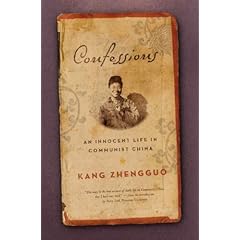
Surviving Under Mao: A Slacker’s Guide

This book looks good. I might read it in a year or so.. when I'm not tired of China anymore.


From the New York Times;
Like a character in a picaresque novel, Mr. Kang stumbles from one misadventure to the next, his big mouth and relaxed habits ensuring disaster at every turn. City, country, prison—he covers it all. The confessions pile up, his dossier swells, and even China begins to look too small to accommodate him. All he wants, really, is a quiet place to curl up and read a book, and a few notebooks to write in. The party won’t allow it.

Mr. Kang serves as an extraordinary guide through an extraordinary period of Chinese history. He lives through the Great Leap Forward, the Cultural Revolution, the thaw following Mao’s death, the growing democracy movement of the 1980s and the crackdown after the protests in Tiananmen Square.

The great events are expressed in personal terms, and they are colored by Mr. Kang’s unusual sensibility. He suffers, but he sees himself more often than not as a comic figure, and the repressive machinery of the Chinese state as a tangle of absurdities.


the rest of the review can be found here:
Confessions - Kang Zhengguo - Books - Review - New York Times

SHIT I DNE SEEN IN BEIJING_3; this retarded thing


the REAL chinese contemporary art

SHIT I DNE SEEN IN BEIJING_2; g00d sh0w

This is the best show I've seen in China, Wang Luyan's "Sawing or Being Sawed?"

It's also quite possibly the worst show title I've seen in China. Supposedly it's supposed to be a giant metaphor for China itself. Who would've thought? I wonder if that's actually the case or if that's just what all the press shit says in hopes of making $$$$$ BANK $$$$$...

Here are some images I took while checking it ooooouuuutttt


In the end, though, I figured it out.


If you look closely at the image above, paying particular atention to the cuts in each circular saw blade, where they intersect -- you will notice that on neither blade does the cut extend to distance of the actual rivets of the opposing blade. Neither one of these blades could be spinning. So, in conclusion; IT IS NEITHER SAWING NOR BEING SAWED. Brilliant.


These are some young(ish) art doodz we met at the opening. They were on their way to dinner with Mr Wang Luyan himself. Maybe someday they will be famous. I don't have their names, but I DO have their email adresses, which I will gladly publish.

blinking305 at yahoo.com (sunglasses around his neck)

yucochina at yahoo.com (green shirt)

chenjiedada at yahoo.com (striped shirt)

After they gave me their email addresses, I warned them that yahoo regularly cooperrates with the Chinese government and reveals the personal information of its users who the Communisy Party wishes to Jail. At this point, however, it became clear to me that this crew knew very, very little English, as they had not the slightest clue about what I was trying to say.

SHIT I DONE SEEN IN BEIJING_1; cheap artz

In keeping with my last post about the pricing of Chinese Contemporary Art, specifically that of Yue Minjun, I share with you this photo I took of one of his pieces - which I found for sale at the Beijing silk market.


Being that Yue Minjun is himself from Beijing, I am quite sure this piece is authentic. I was able to barter the woman selling it from 2000 RMB down to 700 before getting bored and walking away.


The original Andy Warhol next to it was only 500, due to it's smaller size.


Chinese Art Prices Soar

From June 1st, 2007;

Text from Reuters, Images googled by Borna


PRICES for works by contemporary and avant-garde Chinese artists hit record highs at Christie’s spring auctions in Hong Kong on Sunday, in a sign of sustained strong demand. Yue Minjun, known for his paintings of absurd, grinning faces, saw his Portrait of the Artist and his Friends fetch $2,62m, his highest price at auction. In a packed Hong Kong auction hall, bursts of spirited bidding — including live online bids — sent works by other top artists to new highs.
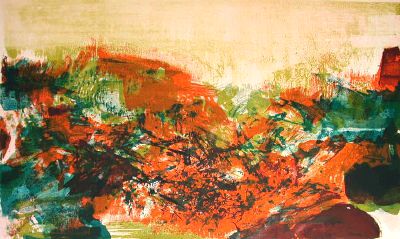

Zao Wou-ki’s vivid coloured abstract, 14,12,59, named after the date it was painted, fetched $3,8m — almost five times its pre-auction estimate.


A pair of bronze figures by Taiwan-born sculptor Ju Ming, called Big Sparring, made $1,9m — also a new high for the artist’s work at auction.


“There’s been no letdown, the (Chinese art) market’s still going very strongly,” said Jonathan Stone, a Christie’s international business director for Asian art.


Chinese art prices have boomed in recent years, fuelled by a robust global economy,


Firstly, a word to Business Day; ending a news article with a comma is highly unprofessional.


Secondly, these prices are astronomical. As Erol was quick to suspect in class, the amount of money being thrown around on Chinese Contemporary Art may signal that the market is in a bubble -- and that this stuff actually isn't worth this much money.


My guess is that that's not the case. There is an ever growing number of people - like that crazed woman who came in to speak with us - who are championing Chinese Contemporary Art in hopes of making it the next big thing in the global art market. But wether it actually becomes the next big thing or not is of no matter, the fact is that the Art in China is getting steadily worked into the global art discourse -- (at the same time, art discourse itself is getting more Global - it goes both ways) -- and through sheer virtue of that, this stuff should atleast hold its value, if not appreciate.

Gigantoraptor


Go here to read about what they found in Inner Mongolia:
http://www.telegraph.co.uk/earth/main.jhtml?xml=/earth/2007/06/13/eadino213.xml

Wednesday, June 13, 2007

Now this is what I call ART.


Shanghai clothing market.

Thursday, June 07, 2007

Pics from DDM warehouse.

Pictures from 2 shows in the past month at DDM warehouse -- the best space in Shangai, I think.

This ones from "Three Unities," 3 solo exhibitions by Zhang Dali, Ren Hong, Wang Lang/Liu Xinhua. It was curated by Mathieu Borysevicz and Yan Yang and its up until the 24th of this month.

And this one's from the show that was up before... TVs and things....

Chi Peng and Scoff in Beijing

Chi Peng's "Journey Into The West" at White Space Gallery, Beijing -- here's a video of his video:


Beijing rockband Scoff live at D22 club, Beijing -- a video of that:

Pics from "Art in America" show at Shanghai MoCA

Mathew Barneys "Cremaster Cycle" crammed into a small room -- no pictures allowed.
Kara Walker's installation with cutouts and slide projections.

From Propaganda to Profit

------------------------
From Propaganda to Profit
June 2007

by Rebecca Catching and Anurag Viswanath

This spring at Moganshan Lu, Shanghai's main art district, Beijing Art
Now Shanghai christened their gallery opening with a rather
unconventional exhibition, "Shanghai Now." Viewers entered the
cavernous warehouse and stared blankly at canvases sheathed in money.
Gallery founders Huang Liaoyuan and Zhang Haoming had wrapped each
painting in shiny wrapping paper printed with faces of various
different currencies. In doing so, they sought to remind viewers to
look beyond the commercial value of art and contemplate its intrinsic
value.

Xu Beihong's 1939 work Put Down Your Whip sold at a recent auction in
Hong Kong for a record $9.2 million.

It's a relevant point in the context of the Chinese art market, which
some claim has begun to spin out of control. Last year, Sotheby's and
Christie's sold $190 million worth of Asian contemporary art—most of
it Chinese. Prices reached unprecedented heights, with 43-year-old
artist Liu Xiaodong dropping canvases for a whopping $2.7 million, and
Xu Beihong's The Slave and Lion smashing the record for a Chinese oil
painting at $6.9 million.

Twenty years ago Chinese artists would have had trouble obtaining a
passport, but now they are globetrotters. They have studios at home
and abroad, showcase their art around the world, and are getting very
rich in the process. Why this boom? According to Simon Groom, head of
exhibitions at the Tate Liverpool, the Chinese art explosion "reflects
the interest in China, driven by the growth of its economy, the
emergence of Chinese collectors and an eagerness in the West for new
speculative markets."

Tate Liverpool's current exhibition "The Real Thing: Contemporary Art
from China" features 26 works by 18 leading Chinese artists, including
Ai Weiwei, Gu Dexin, Zhou Tiehai and the Yangjiang group. The exhibit
has been billed as the "show of the year" and is evidence of the
growing influence of Chinese artists abroad. Indeed, many of China's
most exciting artists are now based abroad—for example Xu Bing and Cai
Guoqiang—which puts them in close proximity to their collectors, 90%
of whom are foreign.

Yet mainland Chinese collectors are starting to get into the Chinese
art game, too. Catering to their needs are hundreds of mainland
galleries and auction houses which are springing up, as well as
foreign institutions that are in the process of opening branches in
China, such as the Centre Pompidou and the Guggenheim.

Auction houses, both foreign and local, have begun to deal directly
with the top-tier Chinese artists, snatching up works while the paint
is still wet, rather than going through collectors and galleries. Some
artists have responded to the demand by using teams of assistants to
churn out paintings. For example, Shanghai-based artist Zhang Huan
employs close to 100 workers in a massive studio that would make Andy
Warhol's factory look like a cottage industry.

A Long March

Under Mao, art was meant to "serve the people," i.e., workers,
peasants and soldiers—social groups not known for their inclination
toward the arts. And the bureaucratic controls designed to oversee
Mao's utopian social-engineering projects quickly made art subservient
to politics.

Artists were disseminators of propaganda, celebrating revolutionary
zeal and socialist euphoria through patriotic paintings. Icons of this
era include Dong Xiwen's oil The Founding of the Nation (1953), Jin
Shangyi's painting Mao Zedong at the December Conference (1961), and
Wu Hufan's Atom Bomb (1965), which marked China's coming of age as a
nuclear power.

Woodblock prints and oils done in the Soviet socialist realism style
featured square-jawed men leading China's industrialization, and
robust women harvesting bumper crops of plump rockmelons, while folk
paintings known as nianhua, or New Year's paintings, depicted bouncing
baby boys riding atop golden fish adorned with communist slogans.

Under the oppressive Cultural Revolution, a new genre, a variation on
socialist realism described as "red, bright and luminous" (hong,
guang, liang), celebrated the accomplishments of the Cultural
Revolution with the use of theatrical illumination and garish colors.
The fall of the Gang of Four in 1976 brought new beginnings, as both
artists and art schools were rehabilitated.

Deng Xiaoping's "opening and reform" in 1978 and the preoccupation of
the state with economics allowed for expanded realm of individual
freedom and space. The officially sponsored "New Spring" art
exhibition in February 1979, followed by an exhibition by the Stars,
paved the way for the rise of the Contemporaries, which included
artists such as Wang Huaqing, Sun Weiman and Zhang Hongtu. The
establishment of Fine Arts in China (Zhongguo Meishu Bao) in 1985, a
Bejing-based weekly arts newspaper; the formalization of official
channels for sale of art by the New York-based Hefner Gallery in
1987-89; and the Chinese Nude Oils exhibition in 1989 were important
milestones which led to the culmination of what some consider the
Tiananmen of the art world: the highly controversial, socially
critical "China/Avant Garde" exhibition at the Chinese National Art
Gallery in February 1989.

Following Tiananmen, the art scene limped back to normalcy after a
brief hiatus. In the following decade, the first art galleries, such
as Red Gate Gallery and Courtyard Gallery in Bejing, and Shanghart and
Eastlink in Shanghai, began to pop up, with clients including
influential foreign collectors such as Uli Sigg and Pierre Huber.

In the years that followed art was no longer used to further the aims
of communism, rather communist imagery was used further the aims of
individual artists who made a fortune off of genres such as political
pop.

Artists such as Wang Guangyi and Xue Song, produced technicolor images
of Mao and graphic paintings of workers. While cynical realists such
as Liu Xiaodong, Yue Minjun and Zhang Xiaogang employed both
hysterical and forlorn human figures in everyday scenes, giving visual
expression to the moral vacuum left behind by communism.

Towards the late 90s, artists began really test the limits of their
freedom with exhibitions such as the "Fuck Off" biennale satellite
exhibition curated by Ai Weiwei at Eastlink in 2000, and Cang Xin's
performance piece To Add One Meter to an Unknown Mountain, where he
piled the summit of a mountain with the bodies of his friends—an
oblique reference to the terror induced by the Cultural Revolution.
Though artists experienced a palpable growth in artistic freedom
through out the 90s and onwards, plainclothes spies from the cultural
bureaus made their presence felt, asking to speak to artists, removing
works, shutting down exhibitions and occasionally holding artists in
prison.

In 2006, the Hei Shehui collective—literally "hey, society" and also a
pun on the Chinese word for mafia—organized the controversial "38 Solo
Exhibitions" in a former army barracks in Shanghai. The exhibition
featured Jin Feng's provocative performance piece An Appeal Without
Words, which comprised a group of actual peasants covered head to toe
in a layer of gold paint, brandishing empty placards—a reference to
their compromised status in appealing land disputes. Such incendiary
work caused the show's closure and landed two of the artists in jail.
New-art observer Geremie Barmé likens the situation to Miklos
Haraszti's Velvet Prison. In such an environment, the majority of
artists choose not to test the limits, and social critique often takes
a back seat to profit.

In some ways, profit poses a more pernicious threat to creativity than
government censorship, as galleries pressure artists to create works
to feed the market. "Now that [the art world] has become
commercialized, these commercial forces inform artists if something
has commercial value," opines controversial conceptual artist Xu Zhen.
Mr. Xu, who spends much of his time working at nonprofit experimental
art center BizArt, pays little attention to the market. Rather he
chooses to raise questions about transparency and China's growing
military ambitions—filming videos of himself driving remote control
tanks into China's neighboring countries and staging mockumentaries of
engineers lopping off the top of Mount Everest.

While the success stories, such as Zhang Xiaogang and Yue Minjun,
dominate the business pages of the Western press, many critics see
them as examples of how Chinese art has failed to innovate. Outside of
the works of a small group of exceptional conceptual artists, much of
what lines gallery walls is uninspiring and derivative. Pia Camilla
Copper, a Chinese contemporary art specialist at the Paris auction
house Artcurial, says, "The painters, sculptors and conceptual artists
from [China's top academies] are technically skilled, they only lack
imagination. A sort of Turner Prize should be created for Chinese art
to encourage young artists to break free from academic rules, the
scourge of the Chinese art academy, and innovate."

At the same time, experimental art is stifled by the lack of
institutional resources. Museums are underfunded, as are nonprofit art
centers such as Shanghai's BizArt and Yunnan's Lijiang Studio. Serious
art criticism is also compromised by corruption amongst journalists
and critics who offer coverage and praise for a fee.

Ms. Catching is the arts and entertainment editor of that's Shanghai,
and the Shanghai correspondent for Art Asia Pacific. Ms. Viswanath is
a free-lance journalist based in Bangalore.

Digging up the Graveyard

I've been itching to dish out a spoonful of constructive criticism ever since Barbara Pollack came in to share her, err, knowledge with us mere mortal students. My takeaway message from her is actually useful - even though she merely stumbled onto this particular piece of wisdom. It definitely wasn't uncovered by deep and serious study. After all, Ms. Pollack prides herself on being completely ignorant of contemporary Chinese history. My cynical side always knew deep down that it would be a Starbucks wielding westerner that would know the most about a culture and language she can't even speak. And an art series that she can't even begin to place in a historical context.

Oops, did that come out too harsh? It's probably just interference from my 'lazy American work ethic'. *ahem*

So what is that takeaway message? Derivative work can have a life and value of its own. I think this is important because it should remind everyone that all work is inherently derivative of other work to some extent. The aesthetic imperative of art in general will necessitate some degree of originality so as to claim your attention even if the work is largely derivative. At least that's how I see it.

What I think Ms. Pollack completely failed to comprehend is a way to place Chinese derivation in a historical context and I will gladly attempt to do so now. Confucius' Analects essentially say (and I'm paraphrasing here) that any work done by a master in the past should be considered to be perfect and can only change in reinterpretation. Hmm, lets put our thinking caps on. This isn't exactly a radical concept. Respect the masters of the past and attempt to append their works rather than replace them altogether. That is the key and that is what I believe that Ms. Pollack completely and utterly failed to realize in her shallow assessment of why Chinese works are inherently derivative. She made a poor attempt to prove that contemporary Chinese artists have transcended their past influences into new categorization altogether. Personally I have yet to decide, but I do know that the culturally dominant voice in Chinese society would encourage a Chinese artist to continually refer to works from the past not as a way of copying, but as a way of studying in its own way. And in this fashion I don't see how they are any better or worse than any other nationality of artist. Everyone emulates their influences, this phenomenon is nothing new and nor will it ever be new.

I guess it must be refreshing to get out of Long Island once in a while. Even if it's only to go to a very distant Starbucks.

Monday, June 04, 2007

Beijing Bound: 798 Space


Thus far, being directly exposed to nothing except for Shanghai art and artists, I’ve found the art scene here in China to be underwhelming. I didn’t know whether to blame this on the my previously conceived high expectations, the art itself, the venues the art showed in, or the way in which (some) of the artists/gallery owners presented themselves to us.
The Beijing art scene may have altered this opinion of mine. Of course I had only spent a few hours at most, but what mainly impressed me was the magnitude of art being produced as well as the various different gallery clusters where one might choose to visit-each proving to be its own little community and sanctuary cut off entirely from the city. On our trip, one of the areas I visited was 798 Space.

Quick Catch-up: wah wah. 798 Space is composed of around 300 artists in residence, 50 galleries as well as bookstores, cafes, bars, a tye-dye clothing shop, shops selling smaller versions of giant art pieces, etc. Built in the 1950s, the buildings here are converted factories representative of the heavy industry and Communist ideology that supported electronic technology and flagship for Mao’s vision of socialism. In the 90s, funding for state operated factories were revoked, and buildings were left vacant—making room for independent artists.—(info taken mostly from various sources when googled 798 space)


If you had arrived at this space- on a Sunday at 5, you would have been one of a few hundred artists/viewers/workers roaming the compound-- a surprising number in comparison to the two or three people wandering around Mognashanlu at any given time. The gallery that I took the most liking to was Long March Space. A show entitled NONO was going on—featuring eleven contemporary artists--installation, Video, photography--none in which had any particular connection. Unfortunately I was pen-less at this time and CANNOT remember Chinese artists’ names for the life of me-- sorry Barbara. I took a liking to three videos in the space—in which I’ll describe two: One video flashed at one-second intervals featuring object after object as a voiceover of ‘liangyuan’ repeated in an endless manner. This displayed everything that the artist bought for 2 RMB, and displayed the 2 cents on top of the object in view. Another video I took liking to was a piece where a few performers dressed in camouflage, donned a camouflage dragon suit, and performed traditional dances against a camouflage backdrop.—there was a whole lot of camouflage. The video jumped back and forth in a steady /repeated manner to the men performing with the dragon suit on and then to clips of the men performing without it on- all the same routine in sequence so your mind had to distinguish when exactly what was happening.

There was also a pretty cool sculpture of a dinosaur split down the center and divided into two glass cases enabling the viewer to walk in between and check out the ‘guts.’ Anyone who sees this immediately relates it to Damian Hurst’s The Physical Impossibility of Death in the Mind of Someone Living. Although the sculpture wasn’t a live shark floating in formaldehyde and instead was a representation of a fake dinosaur standing in water mid-high, the grandeur and interactive display made it a more pleasing piece.

More rotting food art in Beijing

Saturday, June 02, 2007

Wu Guanzhong Painting Tops Poly's `Crazy' Beijing Art Auction

Wu Guanzhong Painting Tops Poly's `Crazy' Beijing Art Auction

By Eugene Tang

June 1 (Bloomberg) -- Wu Guanzhong's ``Ancient City of Jiaohe'' sold
for a record 37 million yuan ($4.8 million) last night at Poly Auction
Co. in Beijing, on the day the Chinese stock market recovered from its
worst slump in three months.

The one-square-meter (10.8 square feet) depiction of a ruined city,
painted during Wu's 1981 teaching sojourn in western China's Xinjiang
province, was estimated by Poly to sell for 15 million yuan. The buyer
was identified only by his surname Cai.

Cai was among hundreds of collectors crowding Poly's inaugural night
sale, scheduled to avoid clashing with the spate of summer art
auctions that typically take place on weekends in the Chinese capital.
Of 65 paintings on offer, 48 reached or exceeded their high estimates.
The sale totaled 247 million yuan.

``People have gone crazy,'' said Sun Liangliang, after his 4 million
yuan bid for Shi Chong's ``Contemporary Scenery'' was surpassed by a
rival's 15 million yuan offer. ``They're paying 10 million yuan as if
it's 100,000 yuan. If you want prove that there's too much money in
Beijing, just watch this market.''

Cai, a private collector who declined to give his full name, bought
two of the eight Wu Guanzhong oil paintings on auction, paying 42
million yuan, not including a 10 percent buyer's premium.

``Jiaohe'' was last sold in 1991 by Sotheby's Holdings auction for
HK$2.55 million ($326,900), a record at that time for Chinese oil
paintings outside the country.

``Jiaohe is the epitome of Wu's work,'' said Chang Tiangu, Poly's art
director. ``This is the piece that a true collector and admirer of
Wu's work would aspire to.''

Yue Minjun

Poly's record prices extend a trend that has seen paintings from
China's contemporary artists regularly sell for many times the
expected price. On May 27, Christie's International sold a record $79
million of 20th century Chinese art and Asian Contemporary works. Yue
Minjun's ``Portrait of the Artist and His Friends'' fetched HK$20.5
million, five times the presale top estimate.

At Poly's auction, Yue's ``Untitled'' sold for 1.7 million yuan,
beating the 1.2 million yuan top estimate.

Wang Yidong's ``Innocent Years,'' depicting a newlywed couple's
journey home, sold for an artist record of 8.5 million yuan, beating
the 6.7 million yuan fetched in December for his oil painting of a
girl playing cards.

Wang, 52, paints in a signature style that dresses a maiden entirely
in bright red against a backdrop that's usually a darkened interior or
the stark snow-covered landscape of his native Shandong province. He
began his art training at 17 and has held exhibitions in Tokyo, Paris,
Rome and the U.S.

Zeng Triple

Three oil paintings by Zeng Fanzhi, a favorite among overseas
collectors of Chinese contemporary art, surpassed top estimates. His
``Mask No. 14'' sold for 8 million yuan, his portrait ``Andy Warhol''
fetched 2.4 million yuan, while ``Landscape'' sold at 4 million yuan.

Mao Yan's ``Memory or the Dancing Black Rose'' sold for 9.1 million
yuan, triple the top estimate.

The auction wasn't all smooth sailing. Xia Xing's ``Perfume in
February'' was auctioned twice. The painting depicting a naked maiden
was first sold for 820,000 yuan. Fifteen minutes later the auctioneer
put the painting back on the block. This time the hammer came down at
750,000 yuan -- to a different winner. Poly officials declined to
explain the discrepancy.

To contact the reporter on this story: Eugene Tang in Beijing on
eugenetang@bloomberg.net

Friday, June 01, 2007

The Next Cultural Revolution

http://www.fastcompany.com/magazine/116/features-the-next-cultural-revolution.html

The Next Cultural Revolution

The Chinese don't get creativity, right? Sure, they can stamp out a
widget, or knock off a DVD, but when it comes to imagination, they
just don't have the gene. Well, keep telling yourself that.