Showing posts with label book. Show all posts

Saturday, March 01, 2008

Shanghai Style by Lynn Pan

A review by Lisa Movius in that's Shanghai Mar 4, 2008

http://www.urbanatomy.com/articles/detail.cfm?aid=1016

the roots of style
" I like looking at what makes Shanghai different. It is something I
have been thinking about for decades," says writer and historian Lynn
Pan 潘翎. Of course, Pan's done more than just think; she's parlayed
her interest into a writing career spanning several decades and
producing many books. Pan left the city in 1955 at age ten and went
on to spend much of her childhood in Hong Kong, Malaysia and Great
Britain, working in Hong Kong as a journalist for the Far Eastern
Economic Review and in Singapore establishing a research center on
the Chinese Diaspora.

But like many Chinese émigrés, Pan couldn't resist the pull of the
homeland and returned to explore the city of her birth. Her
grandfather was the Shanghainese developer behind many historic
Shanghai landmarks such as the Hengshan Hotel and the Canidrome, and
his legacy forms the narrative of Tracing It Home: A Chinese Journey
(1992). A resident since 1998, she first returned to Shanghai in 1981
and wrote Searching for Old Shanghai, and though stories were
plentiful, she had a hard time finding a willing publisher. "Back in
1981, no one had even heard of Shanghai," she recalls. She found one
in Sanlian Shudian 三联书店 (Joint Publishing Company), which has
seen the book through more than 15 printings.

Pan's oeuvre expanded in 1984, when she penned Old Shanghai:
Gangsters in Paradise after meeting the son of famed gangster Du
Yuesheng 杜月笙during her 1981 trip to Shanghai.
"His wife wore nail polish, and she served cucumber sandwiches with
sweet butter at tea – in 1981!" she recalls.
Not long thereafter, Pan wrote China's Sorrow, concerning the Yellow
River, and The New Chinese Revolution, about Deng Xiaoping's 邓小平
reforms, and in 1990 she released Sons of the Yellow Emperor: A
History of the Chinese Diaspora. She has also edited The Encyclopedia
of the Chinese Overseas and co-written books on Chinese craft art and
on Hong Kong in the 1960s.
Her latest book, Shanghai Style: Design Between the Wars, is the most
extensive and authoritative English-language history of the emergence
of haipai, Shanghai's unique fusion aesthetic, to date. Chinese-
language scholarship on haipai literature, art, design, theater, film
and music is extensive, though for the most part, English-language
pickings are limited to salacious tales of gangsters, bankers, whores
and foreigners, a situation that is perhaps attributable to the
belief that contemporary Western readers are uninterested in Chinese
complexities.
"Foreigners have always underestimated Shanghainese culture," Pan
says, chuckling at British Shanghailander architect George Leopold
Wilson's declaration in 1930 that "Modernism will never go down well
in Shanghai." In fact, it was already popular with Shanghainese
artists, designers and architects at the time, and in 1921, the
city's leading paper, Shenbao 申报, ran an enthusiatic full page
article about Le Corbusier "when he was still considered quite
radical world-wide".

Shanghai Style is an engaging, enjoyable and rigorous academic read,
crammed with illustrations from paintings, books, magazines, comics,
advertising, architecture and interior design.
In the book, Pan differentiates haipai 海派 from what she calls
"Shanghai style" 上海式. Emerging between the wars, the latter,
explains Pan, is Chinese mixed with Western influences, to produce a
period style which was Modernist and commercialized. In the sense of
being bastardized and commercial, haipai shares these
characteristics, though it also encompasses elements of culture and
behavior. What's more, haipai is not period specific; it is
constantly evolving, even today.
One of Shanghai style's best representatives is the accomplished
graphic designer, musician, composer, publisher and entrepreneur Qian
Juntao 钱君??(1906-1998), whose biography launched Pan's
investigation into its origins.
Pan says that "Qian described his style as futurism, or weilai pai
未来派," a unique blend of obscure Russian cubist futurism and
Berlin dadaism. It is likely that Qian studied these two movements in
imported magazines, including Vanity Fair, which in the 1930s was
designed by Russian Mehemed Fehmy Agha and Italian Futurist Fortunato
Depero. Qian absorbed other influences from the set design and
cinematic styles of such films as Fritz Lang's Metropolis.
Referring to the influences on artists such as himself and Qian,
cartoonist Ding Cong 丁聪 says they took a bit from here and a bit
from there, digesting and assimilating and translating it so
thoroughly that they completely obscured its origins.

In doing so, they created something entirely new, something uniquely
Shanghai.

Monday, August 27, 2007

Shanghai: Art Deco capital - for now

http://www.telegraph.co.uk/arts/main.jhtml?xml=/arts/2007/08/25/

bashanghai125.xml

Say Art Deco and everyone knows what you mean: sharp geometry, cool
curves, an effortless marriage of style and function. Where to find it,
though, is a different matter.

Dotted around London and New York are palaces of 1920s and 1930s
modernism - such as Senate House in Bloomsbury and the Chrysler
building on Lexington Avenue - their straight lines and sweeping curves
dominating their historic sites or looking almost quaint amid the
higher, newer skyscrapers now surrounding them.

But London and New York are not Art Deco cities. The 1930s, the
movement's peak decade, were not great years for the West, and while
apartment blocks from the period still punctuate the suburbs, they
suffered from the Second World War and post-industrial decay. Too
often, they look shabby and forgotten beside the sturdier homes of
previous eras and the bright convenience of the present.

Yet in a few hold-outs, where history played odd tricks, Art Deco still
dominates. Their names are surprising: Napier in New Zealand, rebuilt
in one go after an earthquake in 1931; Miami Beach; the Eritrean
capital Asmara, a masterpiece from the age of the brief Italian empire.

Shanghai, home to more skyscrapers than New York and a population of 20
million swept into an endless sprawl of suburbs, is not a city one
tends to associate with Art Deco. Yet the 1930s was Shanghai's first
great decade of economic boom, and both the Western bankers who ran the
city and the new Chinese middle classes wanted to associate only with
the new.

In a whirl of construction, grandiose office buildings, apartment
blocks and showpiece villas were erected by international firms, for
European exiles washed up on the shores of the Yangtse, young bachelors
on short-term postings or Chinese students who had followed the fashion
for professional training abroad.

Ladislaus Hudec, a Czech architect from Budapest who was sent to
Siberia by the Russians, ended up in Shanghai designing high-rises such
as the 22-storey Park Hotel (1934) overlooking the racecourse, at the
time the tallest building outside of America.

C H Gonda, another Czech, built cinemas such as the Capitol, now
government offices, and the Cathay, a startling beneficiary of
Shanghai's new trendiness. Recently refurbished, it remains a gleaming
star on the former Avenue Maréchal Joffre, now called Huaihai Lu and
once again the city's most fashionable street.

The years in between have been traumatic: war, Cultural Revolution, the
sudden reopening to the West. It is only now the city is being rebuilt
once again (and much of this architectural reliquary is being
demolished) that Shanghai is being recognised as probably the most
extensive Art Deco landscape anywhere in the world.

After five decades frozen in time, in which waves of poor new residents
have been bundled, a family to a room, into expropriated mansions, this
architectural collection is now emerging.

Two new books, and an associated exhibition on display in the city,
have focused minds. Whether they will be enough to stop the rampant
destruction is another matter. "So many beautiful buildings have been
knocked down: I can't be optimistic about the outlook for protecting
historical buildings," says Deke Erh, co-author of Shanghai Art Deco,
who grew up in Shanghai's French Concession and has become the city's
best-known architectural photographer.

Yet there are signs that even a country as merciless with its past as
China has recognised that its colonial architecture could be an asset,
not an embarrassment. The Peace Hotel on Shanghai's famous waterfront,
the Bund, is under government restoration; once upon a time it was the
Cathay, East Asia's most glamorous address, from whose window young Jim
watched the start of the Second World War in Empire of the Sun. A
handful of the grander family homes, of the sort Jim lived in, are
being "done up" as status symbols by Shanghai's new elite - in some
cases the returned grandchildren of the old elite.

It's not just the buildings. The French Concession, which along with
the International (British and American) Concession has the highest
concentration of pre-revolutionary Western architecture in the city,
used to be full of junk shops. Today it has boutiques and antiques
stores, where the same distinctive old radios and wooden chests are
sold at much higher prices.

Cultural leftovers illuminate Phantom Shanghai, a collection of ghostly
images by the Canadian photographer Greg Girard. While Erh focuses on
what is there, Girard photographs what is not. Navigating the
fluorescent-tinged demolition zones of old Shanghai, Girard narrates
the destruction of a way of life. In some images, house fronts have
been ripped off, to reveal the remains of bedrooms or kitchens. In
others, people still eke out a life amid furniture and detritus
inherited from another age. The decay of a city as its residents lapsed
into squalour is all too evident; in one mansion, a fantastical mixture
of Art Deco and Southern Chinese fancy, Girard counted 152 people
occupying a space originally built for an opium merchant and his family
- albeit a family that included four wives.

But there is also great humanity here, and Girard finds it hard to
begrudge these families their new flats. "I am very anti-nostalgic," he
says, though it would be a hard heart that found no nostalgia here.

The fluorescence is that of the gaudy new Shanghai that overlooks these
curious scenes. And of course it continues; as Girard and I spoke in a
café on the Bund, more bulldozers were moving in a few hundred yards
away.
# 'Shanghai Art Deco' by Deke Erh and Tess Johnston (Old China Hand
Press, Hong Kong). 'Phantom Shanghai' by Greg Girard (Magenta, £25). An
exhibition of photographs from 'Phantom Shanghai' runs at Studio Rouge
M50, 50 Moganshan Lu, Shanghai, from Sept 30-Oct 21.

Sunday, August 26, 2007

Timezone8 Bookstore: clearance sale on all items incl. books on Chinese art

Timezone 8 Art Books, No. 50, Moganshan Lu. Sale ends Friday, August
24th.

Wednesday, July 18, 2007

The problem with a collector-driven market

The problem with a collector-driven market
链接
By Jane Kallir |
Posted 12 July 2007

For the past century or so, the art world has been supported by four principal pillars: artists, collectors, dealers and the art-historical establishment (critics, academics, and curators). From a wider historical perspective, the latter two entities are relative newcomers. The development of art history as an academic discipline, and of public museums, dates back only to the 19th century. Only in the 20th century did dealers evolve from passive shopkeepers to pro-active impresarios, promoting the often difficult efforts of the pioneering modernists with missionary zeal. Public resistance to modernism, coupled with the pressures of international capitalism, gave new importance to dealers and museums, both of which played key roles by superintending the distribution of new art and ratifying its seriousness. At varying points in the course of the past 100 years, the weight of the art world has shifted from one of the four pillars to another. Artists made the modernist revolution; dealers recognised and supported it before academia did; in the post-war period, critics became so dominant that Tom Wolfe lampooned their influence in his 1975 book The Painted Word. And now, it seems, collectors have taken charge.

Over the long term, art-historical value is determined by consensus among all four art-world pillars. When any one of the four entities assume disproportionate power, there is a danger that this entity’s personal preferences will cloud everyone’s short-term judgement. Put bluntly, the danger of a collector-driven art world is that money will trump knowledge. Great collectors should ideally become nearly as knowledgeable as the curators and dealers who help them build their collections. But not all of today’s collectors have the passion or the time necessary to develop this depth of knowledge. Collecting, once the pursuit of a relatively small number of driven individuals, has become far more common among far more people.

This expansion of the art market, made possible by the broader dissemination of concentrated pockets of wealth and by the globalisation of art and related information, has drawn in players who do not have the focused commitment of the traditional collector. The exponential growth of the market, and the genuine gains realised by those who got in early, inevitably fuel the tendency, justifiable or not, to view art as an asset class comparable to stocks or real estate.

Art has also become the greatest common denominator in the new global social order. Today’s rich are an international elite whose members can measure their cachet by the level of VIP services given them at Art Basel and Art Basel/Miami Beach. Anointed by the glamour that today attends the public display of great wealth, the art world has acquired the patina of trendiness that was formerly exclusive to the entertainment and fashion industries. The contemporary focus on trendiness and investment potential, each of which operates on a relatively short timeline, obscures the fact that lasting value in art accrues in the course of generations.

The corollary to a collector-driven art world is that the canon of ostensibly great artists is being largely determined by market forces. The huge prices that have been achieved lately at the top of the market are the result not only of new concentrations of wealth, but of the fact that many people are pursuing the same handful of artists and works of art. Therefore the drop-off from the peak can be steep, becalming the middle market and consigning lesser works and lesser artists to also-ran status.

This is a market with a voracious appetite for alleged masterpieces, and little patience for historical or developmental nuances. It encourages superficiality: rather than collecting a single artist or group of artists in depth, collectors now often prefer to amass scattered masterworks: here a Matisse, there a Picasso, and then perhaps a Schiele. In an overheated environment, the art-historical establishment often finds itself chasing rather than guiding the market. The press must keep up with the latest trends, and coverage of social events and record prices often takes precedence over quiet critical reflection. Museums need the support of trustees, but the most powerful collectors no longer need the imprimatur of an existing museum; they can simply open their own.

If it sometimes seems that the art-historical establishment is missing in action, this is in part because, while the market has been aggressively constructing a new canon, academia has been busy deconstructing the old one. For several decades now, scholars have generally agreed that the white, male, Eurocentric canon that traditionally dominated Western art evolved from historical biases that are no longer morally or intellectually justifiable. Although this change in orientation has literally opened up a whole new world of aesthetic possibilities, it has discouraged academics from making qualitative judgements. Scholarship in areas that are useful to the marketplace, such as provenance and authenticity, has flourished, but overall connoisseurship has declined. Similarly, market pressures push dealers to become generalists, showcasing a hodge-podge of high-ticket items instead of specialising as they formerly did. Auctioneers, operating within a timeframe that seldom extends much beyond the next sale date, focus most of their energies on the highest priced lots. Novice collectors, justifiably wary and insecure, engage consultants who often know far less than the dealers and auctioneers. At every level of the art world, deeper knowledge and principled guidance seem to be in short supply.

The writer is co-director of Galerie St Etienne in New York

Thursday, June 14, 2007

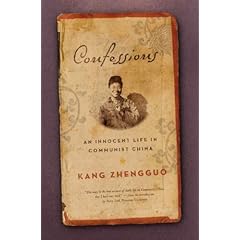
Surviving Under Mao: A Slacker’s Guide

This book looks good. I might read it in a year or so.. when I'm not tired of China anymore.


From the New York Times;
Like a character in a picaresque novel, Mr. Kang stumbles from one misadventure to the next, his big mouth and relaxed habits ensuring disaster at every turn. City, country, prison—he covers it all. The confessions pile up, his dossier swells, and even China begins to look too small to accommodate him. All he wants, really, is a quiet place to curl up and read a book, and a few notebooks to write in. The party won’t allow it.

Mr. Kang serves as an extraordinary guide through an extraordinary period of Chinese history. He lives through the Great Leap Forward, the Cultural Revolution, the thaw following Mao’s death, the growing democracy movement of the 1980s and the crackdown after the protests in Tiananmen Square.

The great events are expressed in personal terms, and they are colored by Mr. Kang’s unusual sensibility. He suffers, but he sees himself more often than not as a comic figure, and the repressive machinery of the Chinese state as a tangle of absurdities.


the rest of the review can be found here:
Confessions - Kang Zhengguo - Books - Review - New York Times

Thursday, March 22, 2007

3030 New Photography In China, by John Millichap

3030 New Photography In China, by John Millichap

Freelance journalist and founder of 3030 Press (an organization set up to produce high-quality English-language books about all aspects of contemporary creativity in China), John Millichap worked with professor of photography Gu Zheng and contemporary artist/author Ou Ning to bring 30 of China's contemporary photographers under 30 together in an energetic photographic survey titled “3030: New Photography in China.” All artists represented in the book are using photography as a medium to speak the language of the social and economic transformation that has occurred over the past few decades. “Together these works can be seen as an attempt to highlight the possibilities and anxieties of life in modern China, as well as a powerful new sense of creative identity,” explains Millichap. Each image in the book is representative of a new generation in China whose, according to Gu Zheng's theory of Chinese personal photography, “sensibilities and character are utterly distinct and for whom the power of the image is paramount.” Chinese society has undergone a major change marked by the embrace of consumerism since the mid-1990s and one glance at any given image in Millichap's book lets the viewer feel that behind the photograph lies a story affected by such transformation. Within the pages exists scenes of love and want, distraction and politics, but most apparent are the thrilling suggestions of a new China brimming with individuals whose voices ring loudly and uniquely through the photographic lens. We're especially fond of Cao Fei's series featuring Star Wars clad figures in everyday China scenes.

Whitney Rosenberg

Wednesday, March 14, 2007

Let 10,000 Young Artists Bloom, Saatchi

http://www.nytimes.com/2007/03/11/magazine/11wwlnQ4.t.html?_r=1&ref=magazine&oref=slogin

Among the young artists whose work can be seen on Charles Saatchi's new
Chinese Web site are two who posted self-portraits: Huiyuan Sun, who
posted a series of photographs called "A Little Matter and My Face,"
above.

Stephanie Hueon Tung describes herself as a "fan of adrenaline and
adventure" on the Saatchi site, on which she has posted her "Light
Writing No. 1" and five other images.

PERUSING the student art on his Web site recently, as he does somewhat
obsessively throughout the day, the British collector Charles Saatchi
happened upon an entry from a painter named Liu Yang. This artist had
posted images of seven of his works, including a painting of a factory
set against a haunting gray background and a work on paper depicting a
woman's elongated torso.

But unlike European, American or Australian users of the site, who use
their Web pages there to tell the world everything about themselves —
their favorite artists, what movies and books inspired them, their
convictions about art or politics — Mr. Liu, a student at the Sichuan
Fine Arts Institute, simply wrote: "I can't speak a lot English. Sorry.
But love. ..." His message trailed off in a few lines of Chinese that
read in part: "I admit that my knowledge of art is limited at present.
However, I am sure I can learn quite a bit from your Web site."

Soon Mr. Saatchi began to notice that Mr. Liu was not alone. Every day
more art students from China were posting their work at Stuart (short
for Student Art), a popular nook of Mr. Saatchi's recently reinvented
Web site, saatchi-gallery.co.uk).

Known a decade ago for spotting talent and turning his discoveries into
superstars, as he did with so-called Young British Artists like Damien
Hirst and Rachel Whiteread, Mr. Saatchi is fixated these days on
Chinese artists, the hottest sector of the global market. And when he
saw these shyly tentative Web postings, something clicked.

"There are so many artists in China who want their work to be seen," he
said in a recent interview at his London home, pausing every now and
then to scan the large computer screen on his desk. "These students,
like all the others, want to know what's going on around the world."

So in January he decided to create a Chinese version of his Web site to
cater to that audience. Working in a warren of makeshift offices in the
basement of his Eaton Square home, 16 experts now oversee both the
popular Saatchi Gallery site, which is getting more than six million
hits a day, and a site in Mandarin, accessible from the home page, that
went online two weeks ago.

"Our goal is to break down language and cultural barriers," said Neeraj
Rattu, who is leading the site's technology team. Having compiled a
considerable amount of data, the team estimates that 20 to 30 art
schools operate in China; that about 10,000 students will graduate from
such schools this year; and that some 14,000 artists in China are
represented by galleries.

"That leaves roughly 10,000 unrepresented artists," said Kieran McCann,
who is in charge of the site's content and creative development.

About 300 art galleries operate in Beijing and about 300 in Shanghai: a
relatively small number, Mr. Saatchi said, considering the surge in
interest in Chinese work. China also has 100 to 200 auction houses,
many of which sell contemporary works.

Like Stuart, the Chinese site is designed to be as navigable as
possible, so that posting work will be as easy as opening an e-mail
account. So far 23 Chinese students have posted work on the site.

Each has a distinct personality. Kang Can, a serious-looking young man
photographed in sunglasses, writes, in perfect English, that he was
born in 1982 in Chongqing and graduated from the Sichuan Fine Art
Institute, and that he has already shown his work at Art Basel Miami.
Among the 15 images he has posted are a series of paintings in which a
sleeping infant is variously depicted in a chewing-gum wrapper, on top
of a gun, on the rim of a KFC plastic cup and in other poses.

"Babies as a symbol of human purity came to this world simple and
unadulterated," Mr. Kang writes.

Some of the pages are more cosmopolitan than others. Stephanie Hueon
Tung, a student at Peking University, writes that she recently
graduated from Harvard. "Now living and working in the wonderful city
of Beijing," her posting says. "Fan of adrenaline and adventure. Olé!"

Ms. Tung shows six images from her "light writing" series, in which she
scrawled in light on photographs ranging from a still life of a park
bench to an image of a closed-up shop that she embellished with a
heart-shaped graffito. Another student, Huiyuan Sun, has posted a work
called "A Little Matter and My Face," a series of 10 photographic
self-portraits in which he depicts himself in many guises.

In a few weeks the Saatchi team hopes the new site will be as
interactive as the English-language one, with a chat room in Mandarin
and a forum encouraging artists to debate current issues. The team's
eventual goal is to make its chat rooms seamlessly international, so
that students from all over the world can talk to one another in many
languages.

As it did for Stuart, the Saatchi team is reaching out to art schools
in China to let them know that their students can post pages at the
site. "It's all been word of mouth," Mr. Rattu said.

One looming concern is potential censorship by the Chinese government.
In recent months China has aggressively brokered controversial accords
with Google and Yahoo to filter the search-engine services they offer
in China and blocked access to some material offered by the Chinese
version of the online encyclopedia Wikipedia.

Mr. Saatchi's team knows it may encounter problems if work posted on
the site is overtly political or directly critical of the Chinese
leadership. Its pioneering effort is likely to be closely monitored by
Western dealers and auction houses in the months ahead.

Pressed on that possibility Annabel Fallon, a spokeswoman for the
Saatchi Gallery, played down the potential for conflict. "After
discussions with the Chinese Embassy here we don't believe censorship
will be too much of a problem," she said in a written statement.
"According to the dealers and artists in China we are in contact with,
government interference in the arts seems to be at a very low level in
the last 10 years."

She added, "We don't foresee our site becoming a platform for
anti-government propaganda, but we do of course aim to be respectful to
the wishes of our host nation if our site starts being abused."

In remaking his Web site nine months ago to appeal to artists and
students and to be more interactive, Mr. Saatchi says, he resolved to
buy nothing posted there for the site's first year. Nonetheless he has
already bought works elsewhere by popular Chinese artists like Wang
Guangyi, Yue Minjun and Zhang Xiaogang. And when his new gallery, a
50,000-square-foot space on Kings Road in the Chelsea section of
London, opens in the fall, its first show will be devoted to
contemporary Chinese artists.

In the meantime he and his Internet team spend their days pondering
ways of attracting more artists to the site. In addition to Stuart, for
art students, and Your Gallery, a separate area where artists of all
ages can post their work and sell it directly without relying on a
dealer or other middleman, the site offers links to museums around the
world and a magazine with art world news and feature articles.

It is also sponsoring a six-month competition called Showdown, the art
Web equivalent of "Pop Idol" in Britain or "American Idol" in the
United States. Artists registered at the site can enter works on which
the Internet public will vote; the winner will get £1,000 (about
$1,930) and a chance to show his or her work at the Saatchi Gallery
when it opens. The runner-up will get £750, or about $1,450.

After posting its first call for submissions last week, the site
reported nine million hits over a 24-hour period. The team will soon
post the contest instructions in Mandarin so that Chinese artists can
compete.

But Mr. Saatchi says he won't stop with China. Over the next six months
his team hopes to draw in artists from India, Russia, Spain and South
America.

"My aim," Mr. Saatchi said, " is to do everything I can to maximize the
site's exposure."

Monday, March 05, 2007

Shanghai Literary Festival at M

THE PROGRAMME

TICKETS

General Sessions: RMB 50, includes a drink
Headline Sessions: RMB 100, includes a drink
Literary Lunches: RMB 200
Students: Half Price
12 Session Pass: RMB 500, includes 10 general sessions and 2 headline
sessions

TO BOOK:

Call (86-21) 6350-9988, 10am - 6pm daily

TICKET COLLECTION:

All tickets must be picked up at least 2 days before the session booked.

A maximum of 4 tickets per person, per session may be purchased.

Tickets can be collected at M on the Bund, 10am - 10pm.

7/F, No. 5 The Bund

silf@m-onthebund.com This email address is being protected from spam
bots, you need Javascript enabled to view it

*Programme changes do happen - please check the website for changes and
updates.

WEEKEND ONE

Saturday, March 10

10am Love and Erotica in French and Chinese Poetry

Qiu Xiaolong and Tang Loaec

RMB 50

Shanghai-born Qiu Xiao Long is a poet, writer, translator and the
creator of the Inspector Chen mystery series. He is the translator of
Treasury of Chinese Love Poems.

Tang Loaec is a writer, editor and literary critic, whose published
work ranges from literary novels to geopolitical conflict and erotica.
He is the founder of La Venus Litteraire, a website devoted to the
review of literary erotica.

12pm Theatre & Scriptwriting: An Asia-Pacific Perspective

Wang Xiaoli and Katherine Thomson

RMB 50

Beijing-based playwright Wang Xiaoli is a graduate of the Central
Academy of Drama and a former journalist. Recent projects include In
the Bag, the first contemporary Chinese play to be performed in the
U.K., and the screenplay for Return in Winter.

Australian playwright Katherine Thomson co-wrote Answered by Fire, for
which she won a major AWGIE award, Diving for Pearls and Change in the
Weather (for which she also wrote the screen adaptation), among other
plays.

2pm From Shanghai to Hong Kong: Women's Friendship and Writing

Susanna Hoe

RMB 50

Susanna Hoe was born in England and lived in Hong Kong from 1987-97, a
period she describes in Watching the Flag Come Down. She also focuses
on women's history with a special interest in women in China (Chinese
Footprints; Women at the Siege, Peking 1900).


4pm Anna May Wong: From Laundryman's Daughter to Hollywood Legend

Graham Hodges

RMB 50

Graham Hodges is a Distinguished Fulbright Professor of History at
Peking University the author of several books on New York City and
African-American history. His new book, Taxi: A History of the New York
City Cabdriver is coming out this month in the U.S.

6pm Headline Session: Gore Vidal

Gore Vidal: In Conversation with Bob Carr

RMB 100

Widely considered America's finest man of letters, Gore Vidal is a
novelist, essayist, playwright and provocateur - and a shrewd,
uncompromising observer of American political history and world
culture.

Bob Carr is the former Premier of New South Wales, an author and an
acknowledged expert on some areas of U.S. History, notably Abraham
Lincoln.

Sunday, March 11

10am - CHILDREN: The Cat in the Hat Birthday Party ~ Crystal Room

Various readers, famous and not yet famous

RMB 50

Storytelling, activities and 50 candles for the Cat in the Hat (who
turns 50 in March)

10am - Inspector Chen: The Shanghai Story ~ Glamour Bar

Qiu Xiaolong

RMB 50

Shanghai-born Qiu Xiao Long is a poet, writer, translator and the
creator of the Inspector Chen mystery series, which is set in Shanghai.

12pm Literary Lunch: The Rise of India

Pankaj Mishra

RMB 200

Pankaj Mishra is a writer and literary critic. His latest book,
Temptations of the West: How to be Modern in India, Pakistan and
Beyond, describes his travels through a changing subcontinent.

2pm Headline Session: Madhur Jaffrey

Taste Memories with Madhur Jaffrey

RMB 100

Bestselling cookbook author Madhur Jaffrey introduced home-cooked
Indian cuisine to food lovers around the world. An award-winning
actress, her recently published memoir, Climbing the Mango Trees,
describes a childhood filled with remarkable tastes.

4pm New Writing from Ireland

Double Session

Claire Kilroy: The Last of the Old Irish

Claire Kilroy will read from her literary thriller, Tenderwire, which
has been shortlisted for the 2007 Irish Novel of the Year.

Mike McCormack: The Rural Postmodern

"The best kept secret in Irish fiction," Mike McCormack is the author
of an award-winning collection of short stories (Getting it in the
Head), a New York Times book of the year, and two novels. He will read
from his latest novel, Notes from a Coma.

RMB 50

Thursday, March 15

6pm Headline Session: The Man Booker Prize Lecture: Kiran Desai

Kiran Desai, Winner of the 2006 Man Booker Prize for The Inheiritance
of Loss

RMB 100

Kiran Desai is the author of Hullaballo in the Guava Orchard, which
critics praised for its prose and the potential of its author. Eight
years later, she published The Inheiritance of Loss, an extraordinary
novel that explores, with intimacy and insight, nearly every
contemporary international issue: globalisation, multiculturalism,
economic inequality, fundamentalism and terrorist violence.

WEEKEND TWO

Saturday, March 17

10am Stranger in a Strange Land: On Writing in a Foreign Land

Guo Xiaolu

RMB 50

Guo Xiaolu is the author of two semi-autobiographical novels, Village
of Stone, contrasting the life of a girl from a small southern Chinese
fishing village with life in modern Beijing, and A Concise
Chinese-English Dictionary for Lovers, a love story in the form of a
dictionary.

12pm Surviving Iraq: High Tea in Mosul and the Human Face of Iraqi
Suffering

Lynne O' Donnell

RMB 50

Lynne O'Donnell is a journalist, formerly based in Beijing, and now
Hong Kong, whose first novel is about two Englishwomen who married
Iraqi men and settled in Mosul over 30 years ago.

12pm Shanghai Writers on Shanghai Writing [session in Mandarin, no
translation]

with Qiu Xiaolong, Chen Danyan and other writers of, and from, Shanghai

Shanghai-born Qiu Xiaolong is a poet, writer, translator and the
creator of the Inspector Chen mystery series, which is set in Shanghai.
His latest book is Case of Two Cities.


Chen Danyan is a writer of fiction, non-fiction and children's
literature, who is well known for her Shanghai stories. She is working
on an in-depth book about the Bund.


2pm La Verite de l'autre [session in French, no translation]

Arlette Shleifer and Joseph Vebret, moderated by Tang Loaec

RMB 50

Arlette Shleifer is a painter, novelist and the author of four books,
including one set in Taiwan.

Joseph Vebret has published essays, anthologies and a novel (Souffre
Plaisir) , which received an award from the Societe de Gens de Lettre.

Tang Loaec is a writer, editor and literary critic, whose published
work ranges from literary novels to geopolitical conflict and erotica.

4pm Headline Session: John Ralston-Saul

RMB 100

John Ralston-Saul is a world-renowned Canadian essayist, author and
philosopher. His most recent work is The Collapse of Globalism, a
critique of the international financial system.

Sunday, March 18

9.45am - Abracadabra! Books, Writing and the Magic of it All ~ Glamour
Bar

Gail Carson Levine

RMB 50

Gail Carson Levine writes fairy tales with a twist. These include Ella
Enchanted, which won a Newbery Honor award. She is also the author of
Writing Magic - Creating Stories That Fly.

10am - Passion: Themes of love, family and relationships

Celestine Vaite

RMB 50

Celestine Vaite is a Tahitian novelist and the author of short stories
and two novels, Breadfruit and Frangipani, centred around a large,
extended Tahitian family and the universal themes of love, family and
relationships.

12pm Headline Session: Jan Morris

Sunday Brunch with Jan Morris, in conversation with Simon Winchester

RMB 200

Born James Humphrey Morris in 1926, Jan Morris began her career as a
journalist, later becoming a full-time traveller and writer. Her works
include the Pax Britannica trilogy, Hong Kong and her latest, Trieste
and the Meaning of Nowhere.

2pm Fiction Writing Master Class with Romesh Gunasekera ~ Glamour Bar

Romesh Gunasekera

RMB 50

Romesh Gunasekera was born in Sri Lanka and moved to London in 1971. He
is the author of Reef, which was shortlisted for the Booker Prize.

2pm Poetry From Two Worlds: American poet Daniel Hall and Chinese poet
Wang Xiaolong, translated by Qiu Xiaolong ~ Crystal Room

RMB 50

Daniel Hall is an American poet, the author of two collections of
poetry, and is currently Writer-in-Residence at Amherst College.

Wang Xiaolong is a Chinese poet whose work reflects contemporary China.

Shanghai-born Qiu Xiao Long is a poet, writer, translator and the
creator of the Inspector Chen mystery series. He is the translator of
Treasury of Chinese Love Poems.

4pm Beasts of No Nation ~ Crystal Room

Uzodinma Iwaela

RMB 50

Uzodinma Iwaela was born of Nigerian parents in Washington, D.C. His
outstanding first novel, Beasts of No Nation, relates the experiences
of a young African boy, conscripted into an army of guerilla fighters.
The book won the four major "first fiction" prizes in the U.S.

4pm Headline Session: Dai Sijie

Depuis la petite tailleuse chinoise [en francais]

After the Little Chinese Seamstress [session in French, no translation]

RMB 100

Novelist and filmmaker Dai Sijie was born in China in 1954. He left for
France in 1984, and has lived and worked there ever since. Dai, who
writes in French, is the author of Balzac and the Little Chinese
Seamstress, Mr Muo's Travelling Couch and Le nuit ou la lune n'est pas
levee.

6pm The Pleasures of A Wandering Life

Simon Winchester

RMB 50

Simon Winchester is an adventurer, author and award-winning foreign
correspondent (for The Guardian), whose books include River at the
Centre of the World - a journey up the Yangtze - and his latest, Crack
at the Edge of the World, about the California earthquake of 1906.

WEEKEND THREE

Friday, March 23

6pm Headline Session: Amy Tan

An Evening with Amy Tan: Musings on Joy, Luck and Fate

RMB 100

Amy Tan is the author of several novels, including The Joy Luck Club,
the internationally best-selling novel about mothers, daughters,
culture and identity. Her latest novel, Saving Fish From Drowning, was
published in 2005.

Saturday, March 24

10am The Adventures of a Wildlife Photographer

RMB 50

Jan Latta is an author and wildlife photographer whose encounter with a
mountain gorilla in Rwanda inspired her to create a series of books for
children on endangered animals.

12pm Literary Lunch with Amy Tan: The Journey to Becoming a Writer

Amy Tan, in conversation with Charles Foran

RMB 200

Amy Tan is the author of several novels, including The Joy Luck Club,
the internationally best-selling novel about mothers, daughters,
culture and identity. Her latest novel, Saving Fish From Drowning, was
published in 2005.

Canadian author

2pm Writing China: Stories, Real and Otherwise

RMB 50

Canadian author Charles Foran, a regular visitor and occasional
resident of China for the past 18 years, reflects on writing fiction
and non-fiction about the country.

4pm Namu: Wisdom From the Land of the Daughters

Namu Erche Yang

RMB 50

Namu Yang is from the matrilineal Moso ethnic group. She left her
village on the shores of Lugu Lake to attend the Shanghai Conservatory
and later became a professional singer, top model, and a prolific
author. She tells her remarkable story in Leaving Mother Lake: A
Girlhood at the Edge of the World. Her latest book is Being Born
Beautiful is not the Same as Being Beautiful.

Sunday, March 25

10am Die Tradition der Singvogelhaltung in Beijing – eine literarische
Reise ins alte Peking [auf Deutsch]

The Birds of Beijing - A Journey Into Old Peking [in German, no
translation]

Rainer Kloubert in conversation with Professor Hans Heindrischke

RMB 50

Rainer Kloubert on the history of birds in Beijing, and the insights it
gives into the life, times and culture of old Peking.

Hans Heindrischke is the Head of the School of Modern Languages at the
University of New South Wales, and the reader for all Rainer Kloubert's
drafts.

12pm Getting It Published

Jo Lusby, Tim Murray, Benython Oldfield

RMB 50

Jo Lusby, General Manager of Penguin (China), Tim Murray, Managing
Director of Ringier Publishing, and Benython Oldfield, literary agent,
on the nuts and bolts of getting that book published.

2pm The Post-Amy Tan Generation

Globalisation, technology and the changing Chinese diaspora - and its
impact on young Chinese writers

Tze Ming Mok

RMB 50

Described as a new critical voice from the New Zealand Chinese
community, Tze Ming Mok will speak on globalisation, technology, the
changing Chinese diaspora and its impact on young Chinese writers.

The Bund from a Chinese and Western Perspective

It's Shanghai's most famous street - but does everyone look at it the
same way? Two writers with books on the Bund - one Shanghainese, one
British - share their views.

4pm The Bund: A Chinese Perspective

Chen Danyan

RMB 50

Chen Danyan is a writer of fiction, non-fiction and children's books
and is well known for her Shanghai stories. She has just completed an
in-depth book about the Bund.

6pm The Bund ~ A Chinese and Western Perspective

Peter Hibbard

RMB 50

Peter Hibbard studied city planning and urban sociology before shifting
his focus to the study of the historical development of tourism in
China. His book The Bund will be launched at this session.

Sunday, February 11, 2007

Mao Now (Ross Terrill - The Wilson Quarterly)

Mao Now (Ross Terrill - The Wilson Quarterly)
January 22, 2007
http://www.wilsoncenter.org/index.cfm?

fuseaction=wq.essay&essay_id=202988

In the early 1990s, a story circulated among Chinese taxi drivers
about an eight- car traffic accident in Guangzhou that resulted in
injuries to seven of the drivers involved; the eighth, unscathed, had a
Mao portrait attached to his windshield as a talisman. The story fueled
Mao fever (Mao re) in China, with shopkeepers offering busts of Mao
that glowed in the dark and alarm clocks with Red Guards waving Mao's
little red book at each tick of the clock. Mao temples appeared in some
villages, with a serene portrait of the Chairman on the altar.
Transmuted uses of Mao continue today. Nightclub singers in Beijing
croon songs that cite Mao's words. Youths dine in "Cultural Revolution-
style" cafés off rough- hewn tables with Mao quotations on the wall,
eating basic peasant fare as they answer their cell phones and chat
about love or the stock market.

This nonpolitical treatment of Mao Zedong (1893–1976) is an escape that
fits a Chinese tradition. When floods hit the Yangzi valley and farmers
clutch Mao memorabilia to ward off the rushing waters, it is
reminiscent of Chinese Buddhists over the centuries clutching images or
statues of Guan Yin, the goddess of mercy, to keep them safe and make
them prosperous. Following the eclectic nature of Chinese popular
beliefs, Mao is added to the panoply of faith.

But where is Mao the totalitarian? Each of the major nations that
experienced an authoritarian regime in the 20th century emerged in its
own way from the trauma. Japan, Germany, Italy, even Russia departed
politically from systems that brought massive war and repression.
China, still ruled by a communist party, has been ambiguous about Mao.
Although Mao's portrait and tomb dominate Tiananmen Square in the heart
of Beijing, Mao himself— unlike Stalin in Russia or Hitler in ­Germany—
has floated benignly into a nether zone as if somehow he was not a
political figure at all, let alone the architect of China's communist
state.

The cab drivers, farmers, pop singers, and shopkeepers are really only
following the lead of the Chinese Communist Party, which does not quite
know how to handle Mao's legacy. New history textbooks approved for
initial use in Shanghai have largely brushed Mao out of China's
20th-century story. China has abandoned Mao's policies but not faced
the structural and philosophical issues involved in Maoism— and
probably won't until the Party's monopoly on political power comes to
an end. Yet unless China gets the Mao story correct, it may not have a
happy political future.

The moral compass of the Mao era has gone, unregretted. But money
making, national glory, and a veil over the past in the name of "good
feelings" are not enough to replace it. Can a society that lived by the
ideas of Confucianism for two millennia, and later by Mao's political
athleticism, be content with amnesia about the Mao era and the absence
of a believed public philosophy?

In a recent biography, Mao: The Unknown Story (2006), Jung Chang and
Jon Halliday pile up evidence that Mao was a monster to eclipse Stalin
and probably Hitler and Lenin as well. "Absolute selfishness and
irresponsibility lay at the heart of Mao's outlook" from his teens to
his dotage, say the authors. In a second influential volume, The
Private Life of Chairman Mao (1995), Mao's physician Li Zhisui portrays
the Chairman as exceedingly selfish, jealous, and promiscuous. Soon
after his book came out, Dr. Li came to speak at Harvard, and I showed
him around the campus. "Three words did not exist for Mao," the gentle
doctor remarked as we strolled. "Regret, love, mercy." These two books—
both written from outside China— explain the Mao era in China as
essentially the consequence of having an evil man at the helm.

Certainly Mao's rule was destructive. Tens of millions of Chinese died
in the forced collectivization of the Great Leap Forward of 1958–59,
victims of Mao's willful utopianism and cruelty. Millions more died,
and tens of millions had their lives ruined, during the Cultural
Revolution of the 1960s. Practicing brinkmanship toward India, Taiwan,
and the Soviet Union, Mao declared that a loss of hundreds of millions
of Chinese in a nuclear war would be a setback China could readily
digest.

Yet "bad man" does not adequately sum up Mao and his legacy. To believe
so would be to embrace the moral absolutism of communism itself, with
its quick verdicts ("enemy of the people," "hero of the proletariat"),
and to repeat the manipulations of official Chinese imperial history,
in which even a flood or earthquake "proved" the evil character of the
emperor. Were the "good men" around bad man Mao blind to his failings
for so many decades? Were the hundreds of millions of Chinese who bowed
before Mao's portrait and wept at the sight of him out of their minds?

Mao made history; at the same time, history made Mao. In addition to
looking at Mao's failings as a human being, we must look at the
structures and pressures that turned whim into tyranny. At the ideas
Mao wielded. At the evaporation— in Mao's case, as in that of several
other dictators— of youthful idealism and exactitude. Above all, at the
seduction of a "freedom" bestowed from above by a party- state that
believed it knew what was best for the citizenry.

In a Jesus was dismembered for speaking out… . He who speaks out does
not necessarily transgress, and even if he does transgress, this is but
a small matter to a wise man." Immediately we face a puzzle: Young Mao
was an ardent individualist. In his years at the teachers' training
college he attended in Changsha, the capital of Hunan Province, Mao's
credo became the self- realization of the individual. "Wherever there
is repression of the individual," he wrote in the margin of a
translation of Friedrich Paulsen's System of Ethics (1889), "wherever
there are acts contrary to the nature of the individual, there can be
no greater crime." His first published newspaper work, written in 1919,
was a plea for the liberation of women, a passionate nine- part
commentary on the suicide of a young woman in Changsha moments before
her arranged marriage.

Mao at 24 saw the Russian Revolution of 1917 as an outbreak of freedom
for the individual that lit the way for China. A young female friend
objected, "It's all very well to say establish communism, but lots of
heads are going to fall." Mao, who had recently read Marx and Engel's
Communist Manifesto, retorted, "Heads will fall, heads will be chopped
off, of course. But just think how good communism is! The state won't
bother us anymore, you women will be free, marriage problems won't
plague you anymore." Although these words hint at Mao's later
callousness about human life, it is striking that he viewed Lenin's
revolution in terms of the "marriage problems" of individual women.

The anarchism of Peter Kropotkin, the author of Mutual Aid (1902), had
a strong hold on Mao until he was nearly 30. A great virtue of the
Russian anarchist, Mao felt, was that "he begins by understanding the
common people." Anarchism in Mao's perception was linked with
Prometheanism; Friedrich Nietzsche was also among his early
enthusiasms. The Promethean individual would prepare for his heroic
role by taking cold baths, running up mountains, and studying books in
the noisiest possible places. This prefigures the fascism to come in
Mao's Cultural Revolution, just as fascism in Europe owed a debt to
Nietzsche. At the time, however, Mao's individualism was nurtured by
the influence of a Chinese professor at Changsha who had imbibed the
idealist liberalism of T. H. Green, the late-19th-century British
philosopher.

Mao was a rebel before becoming a communist. The psychological root of
his rebelliousness was hostility to his father, and, by extension, to
other authority figures. The political root was dismay at China's
weakness and disarray in the face of foreign encroachment, shared by
most informed Chinese of the period. Mao's chief use for the steeled
individual was as a fighter for justice and China's salvation. "The
principal aim of physical education," he wrote in 1917 in New Youth
magazine, "is military heroism." The authoritarian strain in Mao's
individualism was already present.

Eventually, Mao's respect for individual freedom collapsed. There were
four causes. One was the powerful current of nationalism in
early-20th-century China; the cry to rescue the nation eclipsed the cry
for the self- realization of the individual. A second was the large
role of war in China from the 1920s to the '40s. Pervasive violence
made political debate a luxury and favored repression. A third was
Mao's embrace of Marxist ideas of class, central economic planning, and
communist party organization. Fourth was the hangover in Mao's mind and
Chinese society generally of a paternalistic imperial mentality.

In the end, Mao Zedong, facilitated by Stalin, put the population of
the world's largest nation under a regimen that combined Leninism, the
paternalism of early Chinese ­sage- rulers, and, by the 1960s, a
hysteria and military romanticism that amounted to fascism Chinese-
style.

The imperative of national salvation was the first factor working
against Mao's attraction to freedom. Mao was mildly attracted to a
movement comparable in spirit to Europe's Enlightenment that sprang
into existence in China in 1919. Named May Fourth (after the date of an
initial student demonstration), it aimed at modernizing China by
embracing quasi- Western ideas of individualism, democracy, and
science. Liberated individuals would rescue China. But May Fourth soon
split in two, a left wing jumping to Marxist collectivism and a right
wing sticking with individualism. Leftists, including the 27- year- old
Mao, founded the Chinese Communist Party (CCP) in 1921.

Bolshevism helped Mao be progressive and anti- Western at the same
time. Opposition to the West was necessary to many young Chinese
leftists, despite the appeal of Western ideas, because of British and
other foreign bullying of China since the Opium War of 1839–42. From
Lenin, Mao learned that social justice and national salvation could
come as one package. Leninism— and to a lesser degree Marxism— joined
anarchism, nationalism, and individualism in the rag bag of Mao's
political ideas. It was Lenin who showed Mao his road to power. Anti-
imperialism was going to be for Mao, as it was for Lenin, the framework
for revolution. But this anti- imperialist— soon anti-­Japanese— nation
alism that Mao injected into the Chinese Revolution negated individual
freedom.

In the 1930s, Mao argued to the semi criminal secret society Gelaohui
(Elder Brother Club) that its principles and the CCP's were "quite
close— especially as regards our enemies and the road to salvation." Of
course, the threat of enemies was the central point. In his appeal to
non- Han "minority" peoples during the Long March of 1935–36, when Mao
emerged as the CCP's top leader as the Communists retreated before
Chiang Kai- shek's Nationalist forces, Mao challenged Mon golians to
"preserve the glory of the era of Genghis Khan" by cooperating with the
Communists. Pressing the Muslims to support him, he told them that this
would ensure the "national revival of the Turks." Of course, Chinese
nationalism had turned Mao into a trickster. After the wars with Japan
and Chiang Kai- shek were over, there would be no common cause with the
Gelaohui, no freedom for the Mongolians or the Muslims of Xinjiang.

The violence that continually rippled through China was another force
militating against individual freedom. After the death in 1925 of Sun
Yat- sen, a leader in the overthrow of the Manchu dynasty in 1911 and a
founder of the Nationalist movement, the gun was prominent in Chinese
public life. Sun's wavering leadership gave way to warlordism, a
violent rupture of the tenuous coalition of Nationalists and Communists
in 1927, and growing incursions by Japan beginning in 1931. Guns were
to freedom as a cat is to mice. From the time Mao used force to
confiscate the holdings of Hunan landowners in 1925, when he was just
one of many CCP leaders, his political life cannot be understood aside
from violence, both the wars he waged and those waged against him. As
he sought to organize farmers in a remote mountain region, he remarked,
"The struggle in the border area is exclusively military. The Party and
the masses have to be placed on a war footing." Mao spoke of
"criticizing the Nationalists by means of a machine gun."

A third enemy of freedom was the class, organizational, and economic
theory Mao drew from Marx and Lenin. Here Mao's story is similar to
that of Stalin, Castro, and others. Class theory has intrinsic
distortions; people often do not act as members of an economic class.
Class labeling became especially inimical to freedom when Mao was
forced to rely on farmers rather than workers as the key class in
Copyright The Wilson Quarterly

China's revolution. Anyone who pointed out this departure from Marx's
theory of proletarian revolution was stamped out as a renegade.

Eventually, class became little more than a convenient way to demarcate
friends and enemies of the moment. Hence, longtime colleague and
expected successor Liu Shaoqi was "discovered" by Mao in the 1960s to
be a "bourgeois" who had "sneaked into the Party." Never mind that Mao
and Liu had worked together as leftist organizers on and off since
1922.

Wednesday, December 20, 2006

Up Close and Curious

A warm and welcoming voice beckoned me in after I knocked lightly on the turquoise wooden door. As I opened the door, I caught eye of my interviewee and the desk he was sitting behind. After seating myself in the seat offered to me, I was able to see clearly the stacks of paper, books and photographs stacked on my interviewee’s desk. Amazement was my first impression. How could someone manage to have the room to write in such a chaotic sea of papers and books? Casting aside my bewildered admiration, I began my interview.

The person I interviewed is Professor Sun Naishu of ECNU. Professor Sun is the professor and vice president of the School of Art at ECNU. The primary courses that Professor Sun teaches are Research of Western Art History, Research of Chinese Art History and Selected Readings of Art History Masterpieces. His areas of research include Chinese art history, Western art history and art theory. Professor Sun has also published many books in recent years, of which include Chinese Traditional Art, Western Art and European Art Tour.

To start the interview off after exchanging pleasantries with Professor Sun, I asked my first question, “What do you think of Chinese contemporary art?” With a proud smile he answered me, “Chinese contemporary art is definitely lively. As with other aspects of China, there is a lot of Western influence in Chinese contemporary art. For a developing country like China, it is absorbing and learning what successful predecessors did and still does. China is trying to develop in the same successful direction; Chinese contemporary art is the same. China is no longer an isolated country. It is communicating with the world; through the economy, technology, and art.”

Professor Sun’s description left me fervently desiring to better understand the current conditions and characteristics of Chinese contemporary artists. As the professor has mentioned in his first reply, the rapid economic development in China is like a rock tossed into a placid river and causing the giant and frequent ripples to expand outward. Other aspects of Chinese society and culture are influenced by the economic growth and gradually become an influence of their own. Contemporary Chinese art is a perfect example.

Professor Sun explained that two primary factors influence Chinese contemporary art and Chinese contemporary artists. The two factors are money and passion. After China opened up for economic reform, many artists recognize the potential patronage from Western collectors or buyers and have produced art work with the desire to appeal to wealthy Westerners. “The auctions last year were especially good, this year the trend seems to be downhill.” Professor Sun replied as I inquired about the financial situation relevant to Chinese contemporary art. Not all Chinese contemporary artists are motivated by financial return for their art, they do it for passion. Professor Sun remarks that “These artists are very admirable. They observe foreign art and transform it into their own. Many artists that are not driven primarily by money are pioneers to explore modernity and philosophical questions through art. They are portraying the modern and sometimes the post-modern in their works.”

As Professor Sun mentioned, two characteristics of Chinese contemporary art are money and passion. Hopefully Chinese contemporary art can continue to develop and expand, ascending to new heights. But to do this, I believe that a balance between finance and creativity is reached so that artists can understand both perceptions—the financial perspective and the artistic perspective—and produce art that reflect the success of uniting money with passion. And after today’s interview, I believe that even I desperately desire for a successful future for Chinese contemporary art and that Professor Sun’s words could reach a wider audience and gain support.

Wednesday, December 13, 2006

"Shanghai Art Deco" book launch

Launch of Tess Johnston/Erh Dongqiang's book "Shanghai Art Deco"
Sunday, December 17, 4pm
The Glamour Bar
6th Floor, No. 5 The Bund (at Guangdong Lu)
50 RMB, includes a drink
RESERVATIONS HIGHLY RECOMMENDED - call 6350-9988

Saturday, December 09, 2006

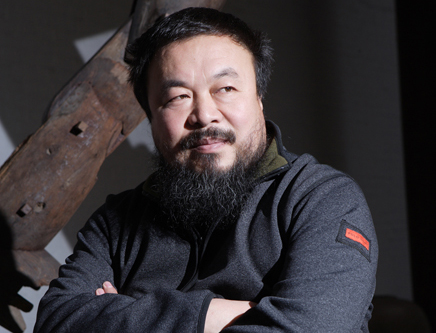
Ai Weiwei : Fragments, Voids, Sections and Rings


Ai Weiwei : Fragments, Voids, Sections and Rings
Dec 05, 2006
Adrian Blackwell (interviewer)
Mason White (instigator)

Ai Weiwei (Beijing) is an artist, curator, and architectural designer who has been working in China and the United States since the late 1970's. An original member of "Stars," a group of artists working in Beijing in the late 1970's during the first years of reform, Ai attended film school with directors Chen Kaige and Zhang Yimou. He then traveled to the United States where he made conceptual art focused on the alteration of readymade objects and situations. In the early 1990's Ai returned to China to edit a series of three books on the art a new generation of artists, based in Beijing's Eastern Art Village: "Black Paper," "White Paper," and "Gray Paper." Since that time he has produced work which focuses on China's cultural history, centralized political system, and the contradictions of modernity. His work has shown across Europe, North America, and China.

Ai uses a set of tactics for the production of his work: undermining the meaning of existing artifacts, attacking fixed hierarchies of power, privileging developed vernacular knowledge and simply letting things take their own course. Over the past few years he has moved closer to architecture, beginning with the design of his own studio, the China Art Archives and Warehouse, and the Urs Meile Gallery all in the outskirts of Beijing; the plan for a Park of architectural follies in his family's home town of Jinhua in Zhejiang Province; and a collaboration with Herzog & de Meuron Architects on the Beijing Olympic Stadium.

This interview by Adrian Blackwell took place on June 21, 2006 at Ai Weiwei's studio/home in Cao Chang Di Village on the outskirts of Beijing.

Adrian Blackwell: There are two things we are interested in with your urban work. The first concerns your thoughts about the contemporary city: what's happening right now with Chinese urbanization? The second is the approach you take in your own urban interventions. I thought we could begin by talking about some of your recent projects. You started making art in the late 1970's, architecture in the late 1990's, and then quite recently, just a few years ago, you began to making works that are about urban space, documents of your city. I know of four of them: the Beijing video map, the void photographs, the Chang'an boulevard project and the Ring Road project. They are each fascinating ways of reading Beijing. What made you start making work like that, what made you start documenting the city?

Ai Weiwei: It's not exactly documenting. It has that function, but it has no documentary purpose. It's not being used as evidence or testimony for anything, but rather to materialize our physical life, its condition in the moment. If you are in place A or on line A or line B, then that present there or that movement is simply as it is. We're living in a constantly changing world and everybody sees it and knows it, but as an artist who is also involved in issues of design and urban planning, I always try to find a way to most efficiently capture what I call fragments, or very small pieces which carry the flavor or carry the essential meaning of the city. So it's a very small effort that I have made, even if it looks quite massive in terms of the length of the videos, its just one section of a fact - the concrete world.

AB: So maybe we could talk briefly about each of those pieces. Let's start with the first piece, the video which follows every street in Beijing within the fourth ring road.

AW: "INTERVAL" - From Da Bei Yao to Da Bei Yao, 8.10. - 7.11.2003.

AB: It's about the street network and it makes me think of Zhu Jianfei's book Chinese Spatial Strategies. He talks about the public space of the city of Beijing arguing that in a western city you have squares, public space is organized around openings in the fabric, while in the Chinese city (his example is Ming and Qing dynasty Beijing) public space is in the street, so the public space is not a void, but a network of space, and the active spaces are simply nodes, or widenings in that network. One of the things that I like about this project is that it is an attempt to map this entire network using video, but it also conflates the map and its opposite, which is the experience of simply being lost in the city. What were you thinking about with this network of every street in Beijing?

AW: I think that a city is a three dimensional or multi-dimensional thing, but the work itself is not even two-dimensional, it's just one point to another, to another, to another. So of course in time this weaves a net if you are thinking of the road you have been traveling along or if you join the individual points. It covers the whole city, all the hutongs and streets, but actually it is made at one time, at a moment. Still it follows a line, a line made by a vehicle which has more than a dozen people on it, and from day 1 to day 16 it passes through different parts of the city. So it appears to be a complete view of Beijing, but if you look at any point, it's just dots, because there is no camera movement except the movement of the car. Very little changes, but the attitude or position that drives it is not passive, it's fixed through a very concrete concept. So I think it's quite ironic in that sense: after 150 hours it documents the city, but nobody would watch 150 hours and at any moment you see, you are confined to a single point, or proportionally stretched points form a very short time within this big work. It only works when it is so long, more than six days and nights. It shows how big, how impossible, how crazy this city is, or how meaningless at the same time, because our proportion, our sense of time, and also our visual contact with the city is really limited by where we are and which direction we go. The moment is about a certain period of time, so when you just look at one moment you don't really know what is before or what is next, even if you can pretty much guess.

AB: With the void photographs you are documenting a moment where there is nothing. If you think about Chinese cities as constantly being torn down and rebuilt, then this is a moment of quiet in between. It seems that this is a moment of potential, but I don't know if you are that optimistic about this possibility all the time. What made you take those photographs?

AW: I think that's a special landscape in today's China, you are the largest construction site in the world and each year Beijing has one hundred million square metres of construction which exactly equals the area of the whole city in 1949. Every year you have this total amount of construction, but you only finish a third of it, thirty million square metres. You know these are just numbers, but they really tell you something about the urban condition, especially when you see that China builds 20 times the area built in Beijing. The whole country is building crazily. So you have a kind of landscape that destroys the old, because the old is really garbage I think. It's really shelter in its worst condition, like Harlem. We used to say that Harlem was 100 times better than most ordinary people's houses. Then after you destroy you make it flat - we call this san tong yi ping (three [infrastructural]connections and one leveling).


Pei Zhao: By now its jiu tong yi ping (nine connections and one leveling)

AW: Then all this land will be rebuilt by powerful people, developers. Most of them, are connected to the government. They make big profits from land, which is not constitutional. After 1949 land was taken from the landlords. They killed the landlords, and the land was given to the people, under the control of the state. Now all the land is being auctioned to people in favor or associated with the state, who are profiting from their privileged background. So you have a landscape that is just waiting for this future. Even if it's totally empty, it will soon be built. Soon it will change the whole landscape of Beijing and of China.

It's a very sad condition, you see a nation or a city rip up the past, not to benefit the people, or the situation, but for profit, it's really the idea of all those new rich. It's like a country girl has to be a prostitute, because there is no other way to get out of the village. China's development is so much based in this idea: to let somebody ruthlessly become rich, but they can't become rich unless the party and government also profits, otherwise it's impossible. So who has become rich? Who has become more powerful? Who benefits and who is losing their rights, or their property. This property belongs to everybody, it belongs to somebody who never sees this property, because you know we are a communist country and this of course for the past 10 to 20 years has been a hidden secret (I mean nobody talks about it). It's stealing. I am not criticizing, these are only the facts. I record the condition after things are torn down and before they are built up, you know it's a very short moment, but in that moment nobody wants to look. There's a question mark there, a big, big void. The old is so sad, but the new is also sad. It is a very sad condition, so I think it's interesting to record it. It's a unique situation, a void with many questions, yet people don't want to look, or raise these questions.

AB: If the void project looks at empty moments inside the city, the Chang'an boulevard project moves in a straight line from outside through the city. It's a section. You were interested in the movement from rural space through urban space and back to the rural. How do you see that piece describing the contemporary city?

AW: I think that surprisingly enough when I started to make it, I did not know what it would be. It's not based on very sophisticated thinking, more on an attitude than on careful planning. It started when one of our friends said they had a son who wanted to come to Beijing, but had nothing to do. After he arrived I asked him if he could do this for a while. Then after days of planning what he should do, I found that Chang'an from the 6th ring road to the 6th ring is 45 km. So I made a very simple decision: just take one video shot for one minute every 50m. No technical requirements: push down, count 1 minute, turn it off, move another 50m, push down... Whatever happens in front of the lens is fine. It took months, the whole winter, because in the winter there is no better or worse view. I think in Beijing the winter really reflects northern landscape very well. You know there is a kind of sadness there. So after months he had taken 1000's of shots: from a very rural, primitive village, to the business district, to the political center, to an old town and later on ended up in the Capital Iron Company, which has just been destroyed and moved to another city township. This video was the last possible time to take these shots of the Capital Iron Company, a symbol of socialist industry. They made all the iron for the nation.

AB: When you look at maps of the growth of Beijing from 1949 to the present it is amazing to watch Chang'an Boulevard, it draws the city out, away from the old city. So much of the growth of the city is along that line that it is much longer than the rest of the city. The Last work that I know about that deals with the city is your Ring Road project.

AW: I made two pieces, one about the second ring and the other about the third ring. The video of the second ring is structured through the 33 bridges, taking one minute shots on each side of the bridge. So standing there you see the car traffic moving from overhead. Then I did the third ring, 50 some bridges and the same thing, the only difference is that second ring is taken on cloudy days (in Beijing most days are like that), while the third ring is taken on sunny days. If you look at it immediately you know that one's second ring and one is third ring. One is just grey color, and sometimes snowing. It's very boring and not an exciting thing to do, but nevertheless it records the condition at the time, its very much like a witness passing through: what he would see, his eye, anybody's eye. There is no artistic or aesthetic value, not much judgment there. Its very, very simple situation; it's very much like a monitor actually.

AB: We have talked a little bit about these works you have done about the city. But the other thing I am interested in is the way you live in the city. You live in a village; you don't really live in the city.

AW: Well this city, Beijing, surprisingly enough is not a real city. I cannot call it a city, it's still very flat, not dense enough, not strong enough, it doesn't have enough variation and mixed conditions, it's still very even.

Today I live in Beijing. I was also born in Beijing, but soon after we moved to Xinjiang and I grew up there. My father owned a courtyard in Beijing, but for years other people lived in it, because our family was considered an enemy of the people, an enemy of the state, and an enemy of the party. Three enemies. Being just one of them was enough to be exiled. Then after 20 years away we returned and lived in different parts of the city. We borrowed places, because our home was inhabited by other people. We lived in different places: West, North, East or South, so I have a very clear image of what the city looked like. At the time the city was occupied by bureaucratic compounds: universities (of course at that time were not open), government, military and so-called scientific research institutes. All these different departments were all under the same conditions, communist, without private property, everyone belonging to the work unit. So there was only one condition: you were either one of the people or an "enemy of the people." So simple. I guess there weren't so many "enemies of the people," but from time to time that vein was very consciously mined. They were trying to find out who is an enemy of the people for years while I was growing up. It was one political movement after another after another. It was crazy every day. Today you talk about it and it sounds more like a joke: "what a joke, why are you still talking about things like this?" But this was true: many people lost their lives. I think that that ghost is still haunting China today. Not the communist ideology, the ideology may be good, but the way that this power is maintained within society and how brutal the state can be towards a human's basic condition, not to talk about human rights, but essential needs.

So that is basically what this city was and still half of the city is still based in this and the other half is the so-called new rich, after Deng Xiaoping's getting rich first policy. Of course who is going to get rich? It's not the ordinary person. But this is not a complaint, it's simply the truth. You know in China, you still talk about people who have the right to live in the city or not to live in the city. It's called hukou, dividing people into locals, non-locals.

PZ: You need a license, or special registration to live in the city. Throughout the entire world only North Korea and China have a policy like this one.

AW: Locals don't have many rights, besides the privilege of enrolling in school, but in the newspaper they often talk about the crimes caused by non-locals. There is a crazy amount of discrimination against people who are not local. A small example of this is that the city has laws against illegal structures like this one (Ai Weiwei's home and studio). Think about it this way: the city is built solely by migrants from the outside, but none of them are locals except the boss and where are they going to live? Nobody provides any space for them. Of course they gather at the outskirts of the city...

PZ: And in the village in the city...

AW: Just to build a place that they can stay, whether it's legal or not.

AB: But this village, Cao Chang Di, is it a village that pre-dates the city, or is it a village like you are talking about now, a village that is built illegally? Most people that live here appear to be migrants, but did they build this village, or did they inhabit an existing one?

AW: In the 1960's this was a so-called "China Albania Friendship Farmer's village." These were very privileged farmers, who were supposed to provide an example for the country, growing vegetables for the city.

So when university or high school students graduated, and Chairman Mao sent them to be re-educated on a farm, they would send some people here. At that time people working here found much better conditions that you would find in more distant areas. At least on the weekend they could ride their bicycle home. These were example farmers, so it was a good farm.

Recently I heard that it is no longer a village and the former farmers are buying out their hukou to become citizens, instead of farmers. The real reason this is happening is so that the land can be returned to the government, because if you are a farmer no one can take your land. Of course there is real benefit for these new citizens, they have some new citizen's rights, but at the same time the land is returned to the state, so that it can sell the land to anybody it wants to. There are a lot of tricks and games, but it is really so simple: the state is the only beneficiary. But in a state, like China, which is not a democratic society, far from it, nobody argues about this, the press won't talk about it, intellectuals never discuss it. Probably I am the only crazy guy who always talks about it. But they think: "This shit guy, why is he always talking about this?"

So what kind of city is this? I can't see a city without citizens. It's like you don't see a religion without followers. Nobody can decide how the city is going to be; everything is done through governmental decisions, today we need a road here, tomorrow... It's by very simple decisions from the top. If Sanlitun (a Beijing bar street) becomes nice they say: "Oh, lets change it, we'll plan big buildings so that someone can profit from it, not all you street vendors." It's crazy, whenever they see people benefit, they will grab the profit. It's so simple, they change here or there not as they say, to make the city better. The city is already better when they do nothing, take 798 (a contemporary arts district, in a former model industrial work unit) as an example, but once they see this they always take action.

So that's my understanding of this city. I really have no relationship with it, except when journalists come to visit me. Otherwise I just go to one restaurant, which I designed (called Where to Go?). A lot of friends go as well, so we have a place to meet and eat dinner, and then I come back here.

AB: This is a courtyard house, and it seems to me that the kind of city you are talking about when you say you live here and in your restaurant, has very few elements, its not so much about the city space in between. I am interested in that because a lot of people, for instance New Urbanists in North America, might say you make a good city by making lively streets, by concentrating energy on the public space of the city. I don't know if it is the way you would like to make a city, but the way you live is different from that, its much more about autonomy, creating a separate space through the compound, but still finding forms of community. The restaurant for instance is a kind of public space, which can't be here in Cao Chang Di; it's better that it's in the city, because people can get to it more easily. I am wondering if you are interested in making a city that starts from the way you live in it, which I think is quite different from the way many others think a city should work.

AW: Of course most European cities are based in convenience and efficiency. But it's not necessary to me that these functional requirements are supported, what is more important is the use. You need a real variety of intention and purpose: people who are doing things that you would never think about. So you know that's important. I think a city can be very brutal and lacking in qualities of life, because these are not desired, but without many different purposes, the city loses its initial reason for becoming a city.

Many places, like this city, have vast areas without use. It is so strange, these spaces are not for individuals; they're for a special group that has no meaning. This group gives the city no meaning; it's a negative force, working against other people.

AB: Maybe we could finish, with a question about the different processes you use in making art. I'll list some of the different techniques, or tactics, that you use. I am interested in how you might see them applying to your design thinking and its relationship to processes of urbanization.

The first is the notion of detournment, this Situationist idea of diverting the meaning of existing artifacts, taking found things and altering them slightly to change their purpose. You've used this technique in architecture, in the projects you did at Beijing's Soho housing development, the silo and the upside down house, and in the project we're sitting in - your own studio. Even though it's not a found object, it looks like one. You use ordinary typologies and vernacular forms and slightly modify them.

The second involves letting things go, you just drop a Han Dynasty vase on the ground. You let it go to see what happens. I think this works like the video pieces as well, you set up a process to see what ensues.

But then there is another tactic you use: an overt "fuck you!", working very strongly against authority, centrality...

AW: ...order and the state, establishment...


Documenta 12 in Kassel, Germany.


AB: And I guess the final one which is in some ways the opposite of the last one, is that you use the power of developed knowledge, a general intellect, vernacular techniques, you have a deep respect for the way people do and make things.

So I am wondering how you see these tactics in relation to the city, can you see your practice of making urban space in relation to these same techniques?


AW: I think we are in a very special moment, As Chinese people, but also internationally, we have gone from the cold war, an unjust society, towards so-called globalization, or a stronger capitalist society, or an information age. Everything happened with a purpose leaving us with unknown conditions. I don't think humans can ever really control this, and it has become even less controllable. Circumstances are now much more complicated than we can predict. For example until quite recently there was no China or India and now suddenly they are the factories of the world. But people are still trying to figure out what this means in relation to ideology, social and political structure, and all kinds of other problems, like education and the environment. I don't think there is a single reaction, at least for myself that can answer these questions, or put me at peace. So I constantly think about the condition of being lost. Once you're lost, you try to figure out where to go. Imagine you're in the middle of a train station and you try to understand the much larger, much more complicated, space around you, or the travel you are embarking on.

So I think it's crazy, the whole thing is crazy. I am not very clear about what I am doing. If I have a character, I don't have much purpose in my life, but more of a natural flow. The only fact is that I am still alive. I'm here. This is solid now, but even this might change. I can't figure out what is going on. Really that's true. Honestly, I don't have a clear answer for this. The clearest answers look ridiculous to me.

Adrian Blackwell teaches architecture and urban design at the University of Toronto's Faculty of Architecture, Landscape and Design.

Pei Zhao practices architecture and urban design with Parsons Brinckerhoff in Beijing.

Together they curated the exhibition Detours: Tactical Approaches to Urbanization in China at the University of Toronto's Eric Arthur Gallery. The exhibition features projects by nine contemporary architects and two artists, including Ai Weiwei's "INTERVAL" - From Da Bei Yao to Da Bei Yao, 8.10. - 7.11.2003.

This work is licensed under a Creative Commons License.

Thursday, December 07, 2006

A thousand words: Yang Fudong talks about The Seven Intellectuals

A thousand words: Yang Fudong talks about The Seven Intellectuals
ArtForum, Sept, 2003 by Yang Fudong

In one of my earlier works, the photographic triptych The First Intellectual, I touched on a concept that still preoccupies me: One wants to accomplish big things, but in the end it doesn't happen. Every educated Chinese person is very ambitious, and obviously there are obstacles--obstacles coming either from "out there," meaning society or history, or from "inside," from within oneself. In this work you could see that "the first intellectual" has been wounded. He has blood running down his face and wants to respond, but he doesn't know at whom he should throw his brick; he doesn't know if the problem stems from himself or society. Ideals and the way they distinguish people, but also the way that they can unite people and encourage them to form bands, partnerships, brotherhoods--this was something I wanted to investigate in more depth, taking my time to do so. When I eventually completed An Estranged Paradise, I started defining this new, vast project, which will untold as five different films. Because I feel that this topic is extremely important to an understanding of China, both past and present, I wanted to articulate several temporalities together: one that is really ancient, the stories of "The Seven Sages of the Bamboo Grove"; another set during the '50s and '60s, when there was a profound questioning of the status and role of intellectuals (and so the films will have a clear '50s, '60s kind of New Cinema flavor); and, ultimately, one dealing with the concerns and ideals of today.

The Seven Sages of the Bamboo Grove were a group of Chinese scholars and poets who fled the troubles accompanying the transition between China's Wei and Jin dynasties during the mid-third century. They assembled in a bamboo grove, where they forgot all of their worldly troubles, losing themselves in pure thought and discussion. This sort of retreat was typical of the Taoist-oriented ch'ing-t'an ("pure conversation") movement, which advocated freedom of individual expression and hedonistic escape from extremely corrupt politics. Their ideal consisted of following their impulses and acting spontaneously, and being sensitive to the beauties of nature.

Advertisement

So the first film in this project stands for me like the beginning of a book, the preface; it's an introduction of the story and the fate of these "new" seven intellectuals. "The Seven Sages of the Bamboo Grove" doesn't exist as a book; there are legends, popular stories, hearsay knowledge, and, of course, what's interesting is also the distortion, the fact that the stories have continually been adapted to changing contexts and times and to the intentions of different storytellers. That's also something that I want to investigate, in light of contemporary China and its relationship to history--this state we're in, which can be described as a moment when we have to negotiate our past while imagining our present.

The first film shows the intellectuals traveling to and dwelling on Huangshan, a very famous mountain situated in the southern part of Anhui Province. The landscape, the nature, is just beautiful there. The peaks rise one on top of another, and the pines and cypresses are luxuriantly green. There are almost a hundred big and small peaks and ridges, and plenty of lakes, brooks, deep pools: It's a kind of dreamscape. I really like showing this sort of atmosphere--very calm, very beautiful, but with a strange, disturbing aspect, exactly like in a dream. Or like when you wake and you cannot accurately recall the dream. Still, a feeling lingers that you had a strange or even frightening dream, and you know if you try to describe it to someone else, that person just won't be able to relate; you can only keep it inside you. In our real life, it seems that where we are heading is always the opposite of where we want to go. It is the same with the dream. We are dreaming we are somewhere, but when we wake up, we find that we are somewhere else. Perhaps this reflects the perfection of the dream.

My new film investigates how this dreamlike environment affects relationships and discussions among the intellectuals--as well as their solitary meditations on individuality and liberty. We need to pursue something, and then we have our spiritual sustenance and belief. In the subsequent films, the intellectuals will be shown living in a building, in a metropolis--say, Shanghai; in a village in the countryside in the company of peasants and villagers; and on a deserted island where they'll start to invent a new world from scratch by defining new modalities of social life and interaction and a new distribution of labor. (Of course, the separation of material and immaterial labor and capital will be questioned.) And in the fifth and last part, eventually the intellectuals will return to the city--and so return to reality, confronting their contemporaries with their new experiences.

At the 50th Venice Biennale, Shanghai-based artist Yang Fudong presented The Seven Intellectuals M Bamboo Forest, 2003, the first part of his new filmic pentalogy, The Seven Intellectuals, an adaptation of the traditional Chinese stories known as "The Seven Sages of the Bamboo Grove." The first Installment (shot in 35 mm black and white) begins the series' exploration of the ambiguous position of intellectuals in contemporary China--their longing for individual freedom in the shifting context of an emerging capitalist economy. Yang, who was born in 1971 in Beijing and graduated from the China Academy of Fine Arts, Hangzhou, has shown an interest in the conundrums of idealism in his earlier works, such as the photographic triptych The First Intellectual, 2000, where he reflects on the difficulty of finding and adopting a rebellious and critical attitude in a society undergoing changes that are as rapid as they are profound. On other occasions, his approach has been poetic and nostalgic, showing stylistic references to Chinese films of the '30s and '40s, such as Yuan Muzhi's Street Angel (1937) and Fei Mu's Spring in a Small Town (1948). Yang's Internationally praised first feature film, An Estranged Paradise (2002), tells the story of Zhuzi, a young intellectual befallen by a strange illness, a restlessness that arrives with the rainy season and disappears with its end. In Yang's own words, the film stands as "a meditation on life," in which nature seems Intimately bound to psychology. It is a poignant convergence of mind and outside world that presages the first episode of The Seven Intellectuals.

Tuesday, December 05, 2006

New Book: Performance Art in China


Performance Art in China takes as its subject one of the most dynamic
and controversial areas of experimental art practice in China. In his
comprehensive study, author Thomas J. Berghuis, introduces and
investigates the idea of the ?role of the mediated subject of the
acting body in art,? a notion grounded in the realization that the
body is always present in art practices, as well as their subsequent,
secondary representations.

Through a series of in-depth case studies, Berghuis reveals how during
the past 25 years Chinese performance artists have ?acted out? their
art, a process involving the preparation of material, as well as
planning and arranging the way the body operates in space, often in
opposition to the principles governing correct behavior in the public
domain.

In addition to a 25 year chronology of events, a systematic index of
places, names and key terms, as well as a bibliography and a glossary
in English and Chinese, Performance Art in China also offers the
reader numerous previously unpublished photos and documents, making it
a must for anyone interested in contemporary art today.

Title: Performance Art in China
Author: Thomas J. Berghuis
Publishing City: Beijing
Publishing Date: November 2006
ISBN: 988-99265-9-8
Document Type: Hardcover
Book Language: English
Pages: 320
Color Images: 200+
Dimensions: 27 x 21 cm
Retail Price: $40.00

Copies can be ordered online at: www.timezone8.com

International distribution to bookstores will follow over the next few
months.