 |
| 9.4 to 11.12, 2006 Opening at Sep 4, 8:30pm Artists/architect: Hung Keung, Ma Qingyun, Song Tao, Xu Tan, Xu Zhen, Zheng Guogu |
Thursday, October 12, 2006
Exhibition for Review


Opening: SHiNE Art Space-Shen Xiaotong Solo Exhibition invitation
SHiNE Art Space cordially invites you to the opening of
On Thoughts Free from Desire - Shen Xiaotong Solo Exhibition
Time: 14th October 2006 at 6:00 pm
Venue: SHiNE Art Space (Block 9, No.50 Moganshan Rd, Shanghai)
For more information please contact SHiNE Art Space at +86 21 62660605 or by email at enquiry@shineartspace.com
--
SHiNE Art Space
www.shineartspace.com
On Thoughts Free from Desire - Shen Xiaotong Solo Exhibition
Time: 14th October 2006 at 6:00 pm
Venue: SHiNE Art Space (Block 9, No.50 Moganshan Rd, Shanghai)
For more information please contact SHiNE Art Space at +86 21 62660605 or by email at enquiry@shineartspace.com
--
SHiNE Art Space
www.shineartspace.com
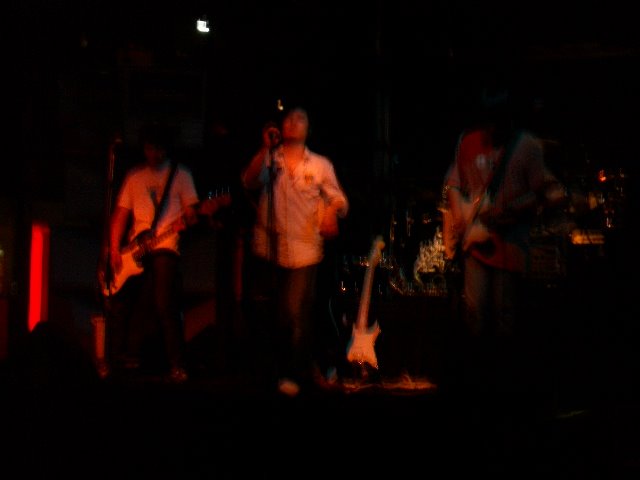
GigLive Shanghai (http://www.gigshanghai.com/giglive) is an assortment of local underground talent, and it happens every Wednesday night at the Bon-bon. Of course, reading this line the first time on a website leads you with little clue as to what the actual event will be like, so one has to venture out on their own and find out. The event is currently being held at a “club”, Bon-bon, however, it’s probably good to point out that the turn-out on Wednesday nights is extremely low – around 20 people, so it’s not as if you have to worry about a club scene. Everyone lines up face against the bar, and stands watching the band rock it out on stage. GigLive also offers up three different bands each night, each being allotted around thirty minutes. It seems that the starting time has been placed for 10:00 PM as well.
What about the music itself? It’s definitely indie rock, though I have to say that I’m a little lacking on a proper background, but it’s pretty similar to what you can hear in the US. I feel that it’s a bit interesting to listen to indie rock that’s done in Chinese though – and it’s strange to think of how similar the sounds are. My only complaints would be against the overly loud music – I think my clothes were moving with the vibrations. My problem seemed to revolve around the fact that I was unable to hear the lyrics, though I suppose that as most of the supporters were ex-pats, it doesn’t constitute an issue. The entry fee is also a little high at 88 RMB. Of course, it’s apparently “all you can drink”, but seeing that I don’t usually drink, it felt a bit excessive, though I understand that you really have to work out venues – and from the website, the club’s really the best they can get right now.
Overall, I would recommend seeing GigLive – especially given that it’s being hosted every week now, and every week they search for differing local talent. Just watch the taxis when leaving – the flood of new taxi drivers into Shanghai that can’t find their way around to anywhere is always a problem, where a 21 RMB ride ends up costing you a good 55 RMB.
Wednesday, October 11, 2006
Breakthrough to Evolution
 After a brief tour of Beijing in the short period of time since my arrival, I can proudly say that I have formulated my personal conception of Beijing as a city and a cultural focus that attracts individuals with a current of rich heritage, deep history, and fervent tradition.
 As a city, Beijing emits an intensely Chinese urban aura—a mixture of modernity and orthodoxy to orchestrate a uniquely Chinese environment—that impacts every residing individual. Composed in a rectangular structure with the city infrastructure expanding in accordance with the original imperial urban design, the city establishes itself upon the foundations of tradition, history, and culture. From the grand macrocosmic perspective, the symbol and representation of centrality and power of the current regime is reflected in the geographical placement of the government buildings and also the utilization and alteration of the lasting history of the imperial remnants—the Forbidden Palace. From the detailed microcosmic perspective, the Siheyuan architectural establishment of the ancient Beijing Hutongs present a structured and hierarchical placement and existence that emphasizes orthodoxy and stability.
Touring around Beijing, most of the city—and people—reflect the historic and conventional characteristics familiar to individuals; however, in the Art Beijing exhibition, the audacity and confrontational art works represent the flourishing of a new culture, a modern culture focused on individuality and conflict to convey awareness.
Bird Flu, this piece instantly choked in my attention the moment I entered into its personal vicinity. Bold and challenging, this piece exemplifies strength and summons conflict to force anxiety into the audience, to defy convention and express awareness. Standing in the center of the work, in front of a red Chinese wall illustrating archaic Chinese fengshui, a young Caucasian female—perhaps in her late 20’s—dressed in a silky black qipao adorned with dazzling gold flowers holds a fluffy and yellow duck while having her nose and mouth covered with a cloth mask. Any harmony from the combination of an attractive young female dressed in an attractive dress complimented by a serene background is violently disrupted by the conflicting imagery of the duck and mask. By incorporating everything—the duck, the mask, the dress, the background; but most of all, the fear and despise in the girl’s eyes—this image is permanently impressed within my mind.
The impression that this art work makes is one that challenges convention. From this picture and the title, I believe that the artist wants to rebel against tradition and the characteristic stereotyping. To me, the girl embodies the weakness of humans. Although in her hand she holds a bird, it is not the bird that brings death, destruction and fear; from the girl’s eyes, her covered mouth and her black satin dress, she personifies Death as she instills apprehension and animosity into humans. I feel that the artist yearns for the audience to understand that human convention is a slave to the weaknesses of innate human characteristics, and ultimately the superficial physical attributes of humans are only facades to mask and hide the same deeper core of inherent human faults. It is this misconception and miscommunication of culture that causes death, panic, and abhorrence between cultures and blinds them from the truth of individual equality.
Monday, October 02, 2006
Pecha Kucha Night Vol.3
First , I want to thanks Defne to give me the chance to visit this party which involved with many foreign designers. It's my first time to take part in a foreigners' party. And I also want to thanks Alicia who went along with me that do not make me feel alone by surrounding with strangers. Because this party is a little noisy and I am busy with taking photos, I failed to take a note with the speech and even memorize some of the speakers' names. I will just talk about my feelings according to my memory and the photos.
 This is the entrance wall, the irregular alining stone make this wall kinds of special, with a broad lense viewing it, it looks some majesty.
 This is the side wall painted with doodles, the doodles are belong to the underground culture, which is forbiding by the goverment(since it is started from the west, it's just the beginning in china, so it is not common to see it), so this wall appeared in this private( or maybe public) looks particular. And the most interesting thing is in the left wall of the picture, you can see that the doodles, the wall and the liana merged into a whole thing, it looks so natural.

 these two pictures are from the stairway, although it is an under decorating building( some parts of it has not be installed), the signs are so attracting. I am believed that they must be prepared by the FAR. These detailed things showed how careful the organizer is and how design are close to the daily life.
 In the party, the workers are lighting up the candles of the Logo "FAR"
I want to illustrate some of my favorite works in that day's party.The first one I want to talk about is the works from a couple - Carte & Sharky. In this couple's work, I saw a new kind of art style, combining the traditional chinese painting with foreign line drawing, and they are combined so natural and harmonize. Couples like them who are both talented in art and from different nationality are not so commen, however, those who can combine their art styles and create a new one may be only are them. I am so appreciate them and even some kinds of envy them, they are so happy to merge their love into their art works. These are some of their works below:

From this picture we can see that the use of the chinese ink and the strong of the stroke of English character are harmoniously merged into each other, the random red/yellow is both exaggerate and natural. The ink marks and fine lines of the mansion are so close to each other but also form a contrast. From artists ' others work we also can see the use of ink and stroke make the person drawing using ink possible.
 The combing of west and east is so obvious in author's work. Boldly use of bright colors and chinese stroke of english character are also the traits.
The couple also use a progress to show how they usually create their drawlings. From the first picture we can see that their works did have some practical meanings. And usually use the bright color to display it, and use the dim ink painting to help people to imagine.
The next that I want to introducted is a Chinese designer, whose major is designing post as well as Logo, T-shirts and clothes. I am very sorry for forgeting his name. This is what he designed for a toy: This artist is very good at using black and white, which also the most classic and difficult- displaying colors, we also can see he use it on the clothes designing later.

 these are the post that he designed for the Nike company, there are also a picture shows he designed a color for a Nike SB shoes( which I did not take it). Since one of my friends is a sneaker, I more or less know something about the Nike SB shoes. Nike company always choose a famous designer for a new shoes. So it must be some special spotlights in this artist.


 These are the some design he made for fashion clothes. From the use of color and patterns , we can see he prefer to using the traditional picture and color to reveal the popular in that decades. It some kind of cater for the fashion of the trend in Nike and Addidas shoes.
 These pattern are also designed from his hand. We all know, sk8 is always the trends in the teenagers. Cause the picture is not very clear, I canot discuss it in detail.
 this is his one shot in designing clothes, which is very different from graphic design, so it is a challenge for him.
I was supposed to discuss another speaker john, since Alicia is one of his fans, I think she is much more powerful in the review. Here is one picture of John.
In retrospect to the whole party, I think it is very good way to show yourself in public. Everyone in this got satisfied, party is party, show is show. And I realise, communication is very important in design world, it is a way of learning as well as the initial phase of design. And it is also the key phase of the marketing in design. Oh, I remembered that there was a deputy of a oversea company, who displayed a group of chart to reveal the austerity environment in china. From the contrast among China, Europe, North American and the investigation of the chinese policy, the company use an easy understanding chart to illustrate the hard situation. Regardless of pollution and energying unreasonable comsuming, the main question in my head is why it is foreign country to survey the situation instead of our own company. Is that less powerful, or is the data is limited by the policy or the whole nation do not have a long sight focusing on this issue. Will the result be strong enough to alert the native people? It's maybe not close to the theme of the party, but what a designer would do to reveal the terrible social reality? Or may be it is the main obligation of the designer.
 This is the entrance wall, the irregular alining stone make this wall kinds of special, with a broad lense viewing it, it looks some majesty.
 This is the side wall painted with doodles, the doodles are belong to the underground culture, which is forbiding by the goverment(since it is started from the west, it's just the beginning in china, so it is not common to see it), so this wall appeared in this private( or maybe public) looks particular. And the most interesting thing is in the left wall of the picture, you can see that the doodles, the wall and the liana merged into a whole thing, it looks so natural.
 these two pictures are from the stairway, although it is an under decorating building( some parts of it has not be installed), the signs are so attracting. I am believed that they must be prepared by the FAR. These detailed things showed how careful the organizer is and how design are close to the daily life.
 In the party, the workers are lighting up the candles of the Logo "FAR"
I want to illustrate some of my favorite works in that day's party.The first one I want to talk about is the works from a couple - Carte & Sharky.
 In this couple's work, I saw a new kind of art style, combining the traditional chinese painting with foreign line drawing, and they are combined so natural and harmonize. Couples like them who are both talented in art and from different nationality are not so commen, however, those who can combine their art styles and create a new one may be only are them. I am so appreciate them and even some kinds of envy them, they are so happy to merge their love into their art works. These are some of their works below:

From this picture we can see that the use of the chinese ink and the strong of the stroke of English character are harmoniously merged into each other, the random red/yellow is both exaggerate and natural. The ink marks and fine lines of the mansion are so close to each other but also form a contrast. From artists ' others work we also can see the use of ink and stroke make the person drawing using ink possible.

 The combing of west and east is so obvious in author's work. Boldly use of bright colors and chinese stroke of english character are also the traits.
The couple also use a progress to show how they usually create their drawlings. From the first picture we can see that their works did have some practical meanings. And usually use the bright color to display it, and use the dim ink painting to help people to imagine.
The next that I want to introducted is a Chinese designer, whose major is designing post as well as Logo, T-shirts and clothes. I am very sorry for forgeting his name. This is what he designed for a toy:
 This artist is very good at using black and white, which also the most classic and difficult- displaying colors, we also can see he use it on the clothes designing later.
 these are the post that he designed for the Nike company, there are also a picture shows he designed a color for a Nike SB shoes( which I did not take it). Since one of my friends is a sneaker, I more or less know something about the Nike SB shoes. Nike company always choose a famous designer for a new shoes. So it must be some special spotlights in this artist.

 These are the some design he made for fashion clothes. From the use of color and patterns , we can see he prefer to using the traditional picture and color to reveal the popular in that decades. It some kind of cater for the fashion of the trend in Nike and Addidas shoes.
 These pattern are also designed from his hand. We all know, sk8 is always the trends in the teenagers. Cause the picture is not very clear, I canot discuss it in detail.
 this is his one shot in designing clothes, which is very different from graphic design, so it is a challenge for him.
I was supposed to discuss another speaker john, since Alicia is one of his fans, I think she is much more powerful in the review. Here is one picture of John.

In retrospect to the whole party, I think it is very good way to show yourself in public. Everyone in this got satisfied, party is party, show is show. And I realise, communication is very important in design world, it is a way of learning as well as the initial phase of design. And it is also the key phase of the marketing in design. Oh, I remembered that there was a deputy of a oversea company, who displayed a group of chart to reveal the austerity environment in china.
 From the contrast among China, Europe, North American and the investigation of the chinese policy, the company use an easy understanding chart to illustrate the hard situation. Regardless of pollution and energying unreasonable comsuming, the main question in my head is why it is foreign country to survey the situation instead of our own company. Is that less powerful, or is the data is limited by the policy or the whole nation do not have a long sight focusing on this issue. Will the result be strong enough to alert the native people? It's maybe not close to the theme of the party, but what a designer would do to reveal the terrible social reality? Or may be it is the main obligation of the designer.
Friday, September 29, 2006
BJG II: Art Economy Forum Schedule
October 6,2006
Current Creation Situation and Recent Collection Trends of Contemporary Art
Host: Pi Li (Curator, Art Critic)
14:00—14:20 Opening Speech by Shang Yusheng, Secretary-General, Wu Zuoren International Foundation of Fine Arts
14:25—15:15 A Speech by Fan Di’an, Director, National Art Museum of China
15:20—16:10 A Speech by Uli Sigg, Former Ambassador of Switzerland in China, Art Collector
16:15—17:05 A Speech by Pierre Huber, Founder of The gallery Art & Public
17:05—17:35 Discussion
October 7, 2006
The Strategy in Art Investment and The Management of Art Fund
Host: Yu Tianhong (Vice-Director,Tai He Media Group)
14:00—14:50 A Speech by Jone Tancock, Vice-Dirctor, Sotheby’s New York Ltd.
14:55—15:45 A Speech by Friedhelm Huette, Curator of Deutsche Bank
15:50—16:40 A Speech by Zhangfan, CEO, Sequoia Capital China
16:40—17:10 Discussion
2. Special Forum
October 8, 2006
Concept and Strategy—Management of Gallery in the Globalization Background
Host: Gu Weijie (Producer and Chief-Editor, Art Finance Magazine)
Speakers: Directors of six different galleries from around the world, which are very young or not well-known, but promising. They will introduce their galleries’ history, management style and represented artists, and discuss the recent trends in their local art market.
14:00—14:30 A Speech by Alexander Ochs, Director of Alexander Ochs Galleries Berlin / Beijing
14:35—15:05 A Speech by Meg Maggio, Director of The gallery Pekin Fine Arts
15:10—15:25 A Speech by Yun Chea Gab, Director of The gallery Arario Beijing
15:30—15:45 A Speech by Ye Mingxun, Director of Main Trend Gallery
15:50—16:05 A Speech by Xiao Qiong, Director of The gallery C5 Art
16:10—16:25 A Speech by Fang Fang, Director of Star Gallery
16:30—17:00 Discussion
October 9,2006
Topic: Art and The Public-The Goals and Responsibilities of Contemporary Art Medium
Speech Time: 15 minutes for each Chinese speaker and 30 minutes (including translation) for each foreign speaker
Host: Zhao Li (Vice-President, School of Liberal Arts Central Academy of Fine Arts)
Speakers: 6 experts from famous public media, art media and web media around the world. They will introduce national and international art newspapers, art magazines, art book publishers and art websites, and discuss the recent trends in contemporary art news report.
14:00—14:30 A Speech by Inna Kanounikova, Manager, LTB Media Liaison Office
14:35—14:50 A Speech by Shu Kewen, Sub-editor, San Lian Life Weekly
14:55—15:10 A Speech by Jiang Wei, Director, www.artron.net
15:15—15:30 A Speech by Zhu Qi, Chief-Editor, Art Map Magazine
15:35—15:50 A Speech by Gu Weijie, Producer and Chief-Editor, Art Finance Magazine
15:55—16:10 A Speech by Wang Gang, Director, www.artnews.cn
Current Creation Situation and Recent Collection Trends of Contemporary Art
Host: Pi Li (Curator, Art Critic)
14:00—14:20 Opening Speech by Shang Yusheng, Secretary-General, Wu Zuoren International Foundation of Fine Arts
14:25—15:15 A Speech by Fan Di’an, Director, National Art Museum of China
15:20—16:10 A Speech by Uli Sigg, Former Ambassador of Switzerland in China, Art Collector
16:15—17:05 A Speech by Pierre Huber, Founder of The gallery Art & Public
17:05—17:35 Discussion
October 7, 2006
The Strategy in Art Investment and The Management of Art Fund
Host: Yu Tianhong (Vice-Director,Tai He Media Group)
14:00—14:50 A Speech by Jone Tancock, Vice-Dirctor, Sotheby’s New York Ltd.
14:55—15:45 A Speech by Friedhelm Huette, Curator of Deutsche Bank
15:50—16:40 A Speech by Zhangfan, CEO, Sequoia Capital China
16:40—17:10 Discussion
2. Special Forum
October 8, 2006
Concept and Strategy—Management of Gallery in the Globalization Background
Host: Gu Weijie (Producer and Chief-Editor, Art Finance Magazine)
Speakers: Directors of six different galleries from around the world, which are very young or not well-known, but promising. They will introduce their galleries’ history, management style and represented artists, and discuss the recent trends in their local art market.
14:00—14:30 A Speech by Alexander Ochs, Director of Alexander Ochs Galleries Berlin / Beijing
14:35—15:05 A Speech by Meg Maggio, Director of The gallery Pekin Fine Arts
15:10—15:25 A Speech by Yun Chea Gab, Director of The gallery Arario Beijing
15:30—15:45 A Speech by Ye Mingxun, Director of Main Trend Gallery
15:50—16:05 A Speech by Xiao Qiong, Director of The gallery C5 Art
16:10—16:25 A Speech by Fang Fang, Director of Star Gallery
16:30—17:00 Discussion
October 9,2006
Topic: Art and The Public-The Goals and Responsibilities of Contemporary Art Medium
Speech Time: 15 minutes for each Chinese speaker and 30 minutes (including translation) for each foreign speaker
Host: Zhao Li (Vice-President, School of Liberal Arts Central Academy of Fine Arts)
Speakers: 6 experts from famous public media, art media and web media around the world. They will introduce national and international art newspapers, art magazines, art book publishers and art websites, and discuss the recent trends in contemporary art news report.
14:00—14:30 A Speech by Inna Kanounikova, Manager, LTB Media Liaison Office
14:35—14:50 A Speech by Shu Kewen, Sub-editor, San Lian Life Weekly
14:55—15:10 A Speech by Jiang Wei, Director, www.artron.net
15:15—15:30 A Speech by Zhu Qi, Chief-Editor, Art Map Magazine
15:35—15:50 A Speech by Gu Weijie, Producer and Chief-Editor, Art Finance Magazine
15:55—16:10 A Speech by Wang Gang, Director, www.artnews.cn
BJG Art Scene
As you are headed to BJG for your October break, please make sure to check/report on the following:
For sight-seeing: Architectural look at National Theater, designed by Paul Andreu, the China Central Television (CCTV) building, designer by Rem Koolhaas, the new Olympic Stadium, designed by Herzog and de Meuron.
Hope this will be helpful! Bring back tons of pictures and reports!
Defne
- Dashanzi Art District (798 Art District): A large compound of artists’ studios, and galleries installed in an outmoded 1950s factory complex, built by a team of East German architects in a style inspired by the Bauhaus.
- Cao Chang Di art district (East End Art district), a home to several important galleries of contemporary art, including Platform China, Courtyard, China Art Archives and Warehouse, Beijing Commune and L.A. Gallery Beijing.
- Arario Beijing Gallery: A new branch of Arario Gallery of South Korea. The Gallery occupies five buildings with three gallery spaces dedicated solely to contemporary art, presenting some of the most cutting edge exhibitions of both Asian and international art.
- Red Gate Gallery’s location in the Dongbianmen Watchtower. Founded in 1991 by Australian Brian Wallace, the gallery presents up to eight shows a year by contemporary Chinese artists.
- Universal Studios
For sight-seeing: Architectural look at National Theater, designed by Paul Andreu, the China Central Television (CCTV) building, designer by Rem Koolhaas, the new Olympic Stadium, designed by Herzog and de Meuron.
Hope this will be helpful! Bring back tons of pictures and reports!
Defne
Tuesday, September 26, 2006
Palladium at NYU vs Zendai Museum in Pudong


Client: Ian Schrager
Program: Disco Stage & Rigging
Architect: Arata Isozaki & Associates
Architectural Lighting: Fisher Marantz Stone & Partners
Completion: 1985
In 1985, famed real estate partners Steve Rubell and Ian Schrager, owners of the legendary Studio 54, purchased the theater, setting their sights on establishing a second chic New York club. They hired to redesign the cinema. Isozaki gutted much of the inside to create the state-of-the-art club, which featured a 3,200 square foot dance floor. Its ceiling featured artwork by New York artists like Keith Haring, Jean-Michel Basquiat, Kenny Scharf, and Andy Warhol.
When the Palladium finally opened its doors in 1985, it was an instant smash, attracting 20,000 people per week, including many NYU students. Much like Studio 54, movie stars and musicians frequented the club, receiving VIP treatment while there.
Jingdezhen International Ceramic Fair October 17-22

If you are interested in coming, or if you would like more info on the fair, please do let me know. (All including accommodation, food, local transportation fees is covered- but the airfare.)
Program:
- The Fair opens on the 18-22 of October.
- The Jingdezhen Local Government will be hosting people for free for 3 days of the fair from the night of the 17th to the day of the 20th. This includes accomodation, all meals and transport around Jingdezhen.
- On the 17th night there will be a small welcome dinner.
- The day of the 18th will be the official opening of the fair and all connected exhibtions including The Taste of Masters Exhibition.
- There will be tours of the fair and ceramic art studio in the day of the 18th.
- The eve of the 18th is the opening banquet.
- The 19th day, the masters workshop will be open to the public all day.
- The 20th there will be a reception lunch at Sanbao, and activities there for one day.

Pecha Kucha this Thursday.
 FAR is organizing this event on the 28th of September before the October break kicks in.
Pecha Kucha Night presents around 15 participants from all walks of creative life, who show 20 slides for twenty seconds each.

from isozaki & the architects of the new zendai museum...
From RCA website
"One client, for the Shanghai Zendai Himalayas Art Centre in Shanghai, obtained a good site from the government provided he included cultural facilities in the development. ‘I was interested to see if it is possible to support the museum with commercial functions like hotels, shopping and offices… normally they would be separate buildings, but I did not want to separate them, as a kind of hybrid where from the outside the functions are made visible through different shapes.’
The principle of using commercial development to fund cultural institutions, he says, has some similarities with the Mori Tower in Roppongi Hills, Tokyo. But there, he explains, ‘all the functions come together in one big volume which looks the same from the outside. It is one very small museum in a very big development, maybe two per cent of the whole project… in mine [the amount of space devoted to culture] will be 20 per cent. If this goes on it will be another type of model for an art museum today, but everyone knows it is very difficult.’ "
Monday, September 25, 2006
NYU in Shanghai Lecture Series Fall 2006
NYU in Shanghai Lecture Series Fall 2006
(Unless otherwise noted, all events are held Wednesday 6:00 p.m. – 9:00 p.m. at the NYU in Shanghai Center located on the campus of East China Normal University)
October 11 Christine Choy, Professor of Film, Tisch School of the Arts, NYU “Aesthetics and Social Commentary in Early Shanghai Films”
October 12 Richard Schechner, University Professor and Professor of Performance Studies, Tisch School of the Arts, NYU “The Responsibilities of the Artist to/in Society” (time and location TBA)
October 23 Bernard Yeung, Abraham Krasnoff Professorship in Global Business, NYU Stern School of Business “Economic Reforms, Business Development, and Long-term Trends in China”
November 1 Jerome Cohen, Professor of Law, NYU Law School “Aspects of Law and Legal Reform in Contemporary China”
November 8 Wei-jun Jean Yeung, Research Professor, Department of Sociology, NYU “Population and Economic Transition in China”
November 13 Joanna Waley-Cohen, Professor of History, NYU “Food Culture in Early Modern China”
November 29 Lixing Frank Tang, Professor of Education, Department of Teaching and Learning, NYU Steinhardt School of Education “Education and Reform in Contemporary China”
December 13 Xudong Zhang, Professor of Comparative Litearture and East Asian Studies “Can Socialism be Postmodern?”
December 20 Mingzheng Shi, Director of NYU in Shanghai “Challenges for Sustaining China’s Development”
(Unless otherwise noted, all events are held Wednesday 6:00 p.m. – 9:00 p.m. at the NYU in Shanghai Center located on the campus of East China Normal University)
October 11 Christine Choy, Professor of Film, Tisch School of the Arts, NYU “Aesthetics and Social Commentary in Early Shanghai Films”
October 12 Richard Schechner, University Professor and Professor of Performance Studies, Tisch School of the Arts, NYU “The Responsibilities of the Artist to/in Society” (time and location TBA)
October 23 Bernard Yeung, Abraham Krasnoff Professorship in Global Business, NYU Stern School of Business “Economic Reforms, Business Development, and Long-term Trends in China”
November 1 Jerome Cohen, Professor of Law, NYU Law School “Aspects of Law and Legal Reform in Contemporary China”
November 8 Wei-jun Jean Yeung, Research Professor, Department of Sociology, NYU “Population and Economic Transition in China”
November 13 Joanna Waley-Cohen, Professor of History, NYU “Food Culture in Early Modern China”
November 29 Lixing Frank Tang, Professor of Education, Department of Teaching and Learning, NYU Steinhardt School of Education “Education and Reform in Contemporary China”
December 13 Xudong Zhang, Professor of Comparative Litearture and East Asian Studies “Can Socialism be Postmodern?”
December 20 Mingzheng Shi, Director of NYU in Shanghai “Challenges for Sustaining China’s Development”
Sunday, September 24, 2006
Hyper Design: Awareness of the Mind
The Shanghai Biennale is my first experience visiting an art exhibition, which is ingeniously named Hyper Design in Shanghai. As a modern city that has shown to the world the rapid growth of the Chinese economy and social infrastructure, Shanghai is a city that incorporates Western modernity, witnessed in the rapidly expanding consumer culture and the towering skyscrapers of glass and steel. Transcending modernity and the culture of global market force, Chinese heritage roots deeply in every individual, from filial piety to the adherence of tradition and culture. Shanghai itself is a strong justification of hyper design, as Curator Zhang Qing would say, “sheji refers to something planned or intended in the Chinese context.” The “sheji” of Shanghai is a clear indication that China has meticulously planned and directed development in Shanghai to create the image of inspiration and awe. The 2006 Shanghai Biennale is a perfect compliment of Shanghai in the aesthetic perspective and field. Through the talent and creativity of the curatorial team, the composition and “sheji” of the Shanghai Biennale Hyper Design 2006 incorporates the artistic ingenuity of many artists from across China and the world. The combination of aesthetic visionaries amplifies their individuality in a modern world that also reflects the globalization and unity of the world. Shanghai Biennale is truly a hyper design—an ascension and empowerment of human intellect.
The first pieces to attract my attention are the works titled “A Brand New Game” by Chan Yau Kin of Hong Kong. At first glance, from less than an arm’s length away, the material Chan uses to create his works were the collected brands of consumed articles of the two rivaling corporations: Coca Cola and Pepsi. Looking at each individual label, I get the feeling that individual demands and mass production formulate the society that we exist in. As there is both Coca Cola and Pepsi, it is shown through the individual logos that people all have their own individual preferences and will not all submit to the same demand and supply. It is this individualism and choice that fuels contemporary global market and society. Seeing all these labels from up close gives the viewer the perspective that our world is now gradually uniting together through the progress and creation of corporations that manufacture and develop items that strive to improve human living standards and satisfaction.
At first, though amazed by the creativity, devotion, and effort Chan committed to his artwork, my mind did not comprehend the deeper theme and intentions of the artist. Compared to the Biennale theme and backdrop of many aesthetically and intellectually inspiring works that illustrate our world by perplexing the mind and elevating it beyond basic comprehension—the essence of Hyper Design—I could not grasp the motif of the artworks. However, as I stepped back and observed Chan’s pieces from a distance, amazement and admiration flushed through my entire body. Facing me, instead of a congregation and combination of thousands of individual labels, are two giant logos that are all too familiar to my eyes. On the one side, there’s “Coke: Dare for more,” and on the other side, “Pepsi: It’s the real thing.” Comparing the two pieces, I could sense the contrast and compliment these two pieces create and the heavy impact and implication they construct. Through the difference in perception and optical illusion, Chan creates two vastly contrasting visual images in each piece: one of the individualistic microcosm and one of the unified and generalized macrocosm. In his artwork, Chan focuses on the business world as it presents very many representations and reflections of generalized social actions and patterns. By comparing the two large logos, we see that they are collages of their rival’s logos. This shows not only that each brand name attempts to establish itself in the world with a unique identity, they nevertheless shares many similarities and objectives.
Curator Zhang Qing’s words resonated in my mind, as he said that sheji “manifests human desires, as well as intellect and spirituality….It is noteworthy that design has brought about self-realization and self-restraint.” Reflecting upon Zhang Qing’s words, I believe that through aesthetics, Chan accurately portrays contemporary commercialism as having met the interests of individuals through manifestation in the production of a variety of consumer products—soft drinks—and by comparing the example of two brands that advocate their individualism and distinctive characteristics but ultimately share the same objectives and qualities.
Chan’s “A Brand New Game” exemplify the Biennale’s Hyper Design theme by presenting to his audience artwork that manifests human intellect with the intention to convey self-realization and self-restraint in a expanding world of uniformity in which individuality and competition with the intent of improvement has been lost and bringing awareness to the viewers.
The first pieces to attract my attention are the works titled “A Brand New Game” by Chan Yau Kin of Hong Kong. At first glance, from less than an arm’s length away, the material Chan uses to create his works were the collected brands of consumed articles of the two rivaling corporations: Coca Cola and Pepsi. Looking at each individual label, I get the feeling that individual demands and mass production formulate the society that we exist in. As there is both Coca Cola and Pepsi, it is shown through the individual logos that people all have their own individual preferences and will not all submit to the same demand and supply. It is this individualism and choice that fuels contemporary global market and society. Seeing all these labels from up close gives the viewer the perspective that our world is now gradually uniting together through the progress and creation of corporations that manufacture and develop items that strive to improve human living standards and satisfaction.
At first, though amazed by the creativity, devotion, and effort Chan committed to his artwork, my mind did not comprehend the deeper theme and intentions of the artist. Compared to the Biennale theme and backdrop of many aesthetically and intellectually inspiring works that illustrate our world by perplexing the mind and elevating it beyond basic comprehension—the essence of Hyper Design—I could not grasp the motif of the artworks. However, as I stepped back and observed Chan’s pieces from a distance, amazement and admiration flushed through my entire body. Facing me, instead of a congregation and combination of thousands of individual labels, are two giant logos that are all too familiar to my eyes. On the one side, there’s “Coke: Dare for more,” and on the other side, “Pepsi: It’s the real thing.” Comparing the two pieces, I could sense the contrast and compliment these two pieces create and the heavy impact and implication they construct. Through the difference in perception and optical illusion, Chan creates two vastly contrasting visual images in each piece: one of the individualistic microcosm and one of the unified and generalized macrocosm. In his artwork, Chan focuses on the business world as it presents very many representations and reflections of generalized social actions and patterns. By comparing the two large logos, we see that they are collages of their rival’s logos. This shows not only that each brand name attempts to establish itself in the world with a unique identity, they nevertheless shares many similarities and objectives.
Curator Zhang Qing’s words resonated in my mind, as he said that sheji “manifests human desires, as well as intellect and spirituality….It is noteworthy that design has brought about self-realization and self-restraint.” Reflecting upon Zhang Qing’s words, I believe that through aesthetics, Chan accurately portrays contemporary commercialism as having met the interests of individuals through manifestation in the production of a variety of consumer products—soft drinks—and by comparing the example of two brands that advocate their individualism and distinctive characteristics but ultimately share the same objectives and qualities.
Chan’s “A Brand New Game” exemplify the Biennale’s Hyper Design theme by presenting to his audience artwork that manifests human intellect with the intention to convey self-realization and self-restraint in a expanding world of uniformity in which individuality and competition with the intent of improvement has been lost and bringing awareness to the viewers.
Friday, September 22, 2006
Thursday, September 21, 2006
Photography and Its Evolution as Fine Art Panel Discussion

Save Sunday, September 24, 4pm to go to this panel, which will be examining recent trends in the role of photography in China’s contemporary art scene! DA
Photography and Its Evolution as Fine Art
Panel Discussion
Meg Maggio, Pekin Fine Arts
John Batten, John Batten Gallery, Hong Kong
Gu Zheng, photographer and professor, Fudan University
Greg Girard, photographer, Shanghai
Over the last ten years, China has seen a veritable explosion of new photo-based contemporary artwork, which is now accepted – and well regarded as “art” – in major museums, art fairs, and gallery exhibitions. No longer relegated to a secondary position, the boundaries between photography as social documentary and photography as contemporary artwork are forever blurred; and, whether an artist currently works in photography and moves to painting,
or vice versa, seems less and less important.
RMB 50, includes a drink
Picture Credit: Sitting on the Wall - ShenZhen 1 by Weng Fen, 2002
We were at the Zendai Museum today!

We visited ‘The Twelve: Chinese Contemporary Art Awards Exhibition 2006’ today. Thanks to Jody, Yoki Xiao and Jennifer! 12 recipients of the CCA Awards are featured in this exhibition, the largest of the Biennale’s concurrent showcases. Works from Cao Fei (Whose Utopia?- performance/interview project done with Osrem lightbulb factory workers in Foshan) is striking! Works by Heng Guogu, Chen Shaoxiong, Gong Jian, Hong Hao, Kan Xuan, Li Dafang, Liu Wei, Qing Ga, Qiu Anxiong, Zhou Xiaohu, and Huang Yongping among others.
Collaborative Presentations on the State of Museums in China
o Activate the blog with postings and comments. Include your documentation through use of text and pictures. Follow the instructions here.
o Collaborative Presentation
Group # 1
Greg + Charlie + Alicia
cc1683@nyu.edu, gwp201@nyu.edu, aliciawz@hotmail.com
Group #2
Sonia + Joshua + Alex
jds332@nyu.edu, sap293@nyu.edu, alexfengchina@hotmail.com
Next week's group presentation should allow you to engage in a critical dialogue with these three major museum visits you have recently completed. The goal is also to learn the value of collaborative projects by undertaking a group presentation in response to issues raised by the site visits.
In your presentation, please respond to the issues and challenges of contemporary art presentation and museology in China- posed by the site museum visits. Feel free to draw also cues from the other museum visits you have done during your orientation or previous visits in Shanghai. Consider the many questions about the state of the museums in Shanghai and China.
For example, with the new museums (both private and public) making their way into almost every phase of the culture and rooting themselves in the day to day lives of Chinese audiences, what do you perceive as failures and successes? How is contemporary art/new media merging with physical space? What are the conditions for art display? How do you measure professionalism? What is the context and history of museology in China? What do you think are the impacts of museums on the rapidly changing society? What do sponsorship, museum conditions, conservation really mean in China?
Create a creative concept for your presentation. Include your own documentation and skills. Some tools can include photos, drawings, paintings, books, animations, music, spoken word, acting, projection, Internet, youtube etc.
Each presentation should be 25-30 minutes.
Have fun!
o Collaborative Presentation
Group # 1
Greg + Charlie + Alicia
cc1683@nyu.edu, gwp201@nyu.edu, aliciawz@hotmail.com
Group #2
Sonia + Joshua + Alex
jds332@nyu.edu, sap293@nyu.edu, alexfengchina@hotmail.com
Next week's group presentation should allow you to engage in a critical dialogue with these three major museum visits you have recently completed. The goal is also to learn the value of collaborative projects by undertaking a group presentation in response to issues raised by the site visits.
In your presentation, please respond to the issues and challenges of contemporary art presentation and museology in China- posed by the site museum visits. Feel free to draw also cues from the other museum visits you have done during your orientation or previous visits in Shanghai. Consider the many questions about the state of the museums in Shanghai and China.
For example, with the new museums (both private and public) making their way into almost every phase of the culture and rooting themselves in the day to day lives of Chinese audiences, what do you perceive as failures and successes? How is contemporary art/new media merging with physical space? What are the conditions for art display? How do you measure professionalism? What is the context and history of museology in China? What do you think are the impacts of museums on the rapidly changing society? What do sponsorship, museum conditions, conservation really mean in China?
Create a creative concept for your presentation. Include your own documentation and skills. Some tools can include photos, drawings, paintings, books, animations, music, spoken word, acting, projection, Internet, youtube etc.
Each presentation should be 25-30 minutes.
Have fun!
Survival of the Fittest in Business
We visited the MoCA during its exhibition MoCA Envisage—Entry Gate: Chinese Aesthetics of Heterogeneity. The first impression left on me was made by the structural design of the MoCA. Built from glass and steel, the MoCA represents transparency that contains the ingenuity, creativity, and social and personal experience of artists in regards to aesthetics, emotions, and experience. In an architectural respect, the MoCA perfectly illustrates the Envisage theme through the convergence of glass and steel to encase and craft perception flawlessly and lure the audience to perceive the art within.
As I explored the MoCA, the variety and originality exhibited by the many artworks attracted me in all directions and allowed my imagination and perspective to converge with the artist’s. The art works exhibited in the MoCA reflect the progressive impression modernity instills in everyday life, in society, culture and individuals. These artworks are inspired and illustrate the union of aesthetics with the daily lives of individuals and their interactive positions in society. As the artworks represent the perspectives and experience of artists in China or of Chinese origin, their ingenuity reflects the development and transformation of China and Chinese elements in life.
The piece that completely and immediately caught my attention is Andre Cervera’s painting “Story of Chinese Business.” As I first saw the picture, a black and white drawing of ancient Chinese men gathering around a table and complimented by a dynastic Chinese background, I thought that the presence of this painting in the MoCA Envisage exhibition must definitely contain hidden meaning that yearns to be debunked. Feeling adventurous, I looked for the title and author of this painting and found the answer (as mentioned above), though initially to my astonishment. The focal point of the artwork lies in center of the picture with the three distinctive illustrations—the man with the face of a tiger standing on the left, the table with nothing on it, and the man with a normal face standing on the right. The peculiar representation of the two main characters at the center of the painting is pivotal to the accentuation of the piece’s understanding and underlying cultural representation. In modern society, economy is based on reciprocal relationships of mutual agreement and benefit. However, Cervera depicts one of the characters as a man with the face of a tiger whereas the other individual is portrayed as a normal human. This portrayal of the two characters creates a sense of imbalance and challenges the foundation of Western economic interaction. Through the tiger-headed character, the artist illustrates to the audience primal dominance in the context of humanity: an instinctive and beastly aggression, the tiger-head ravenously advances on his prey.
Although the two main characters are the focus of the painting, without the crucial presence of the table at the center, the painting would not as deeply and distinctively emphasize the cultural significance of Chinese business relations. In the painting, the table lies in the exact center of the entire painting, its shape distinctively square. The imagery of this table symbolizes the equality and balance of an economic relationship, which contrasts more sharply with the predator and his victim. It shows to the audience that even though the two parties to the business deal compliment each other in an atmosphere of equality, in Chinese business culture, survival of the fittest dictates and characterizes Chinese business relations. The table also accentuates the lack of a transparent and definitive legal system in Chinese relationships. In Western society, the presence of legal institutions and illustrations and the conduct of relationships in a formal surrounding are the milestone for successful interaction and development; however, as seen in the painting, the table is bare and empty. This lack of legal presence highlights the continuing chaos in Chinese society and its lack of an institutionalized and transparent legal system, especially in its business interactions.
The setting and outfits of these pivotal characters symbolic of Chinese business lies also plays a peculiar role in accentuating Chinese entrepreneurial relationships. As this is an artwork describing the cunning and primal actions of Chinese business relationships, the setting does not have to be archaic and neither does the clothing of the characters. However, by illustrating a background and outfits that parallel ancient Chinese attire and architecture, the artist portrays the extended chronology of the competitive and brutal Chinese business relationship as a tradition deeply embedded in Chinese culture that retains through modernity and progress—through the age of a developing Chinese legal institution and emergence of a global market system.
As China progresses and gradually synchronizes with the Western world—enjoying Western consumerism, accepting Western pop culture, and appreciating Western aesthetic perception—there remain traditions rooted deeply in the Chinese culture and individual psyche that will not fade from the increasingly modernized nation and culture. But through rigorous efforts and a demanding community, Chinese have the possibility and hope of evolving beyond primal instincts and selfish desires and progress towards a true civilization.
We visited the MoCA during its exhibition MoCA Envisage—Entry Gate: Chinese Aesthetics of Heterogeneity. The first impression left on me was made by the structural design of the MoCA. Built from glass and steel, the MoCA represents transparency that contains the ingenuity, creativity, and social and personal experience of artists in regards to aesthetics, emotions, and experience. In an architectural respect, the MoCA perfectly illustrates the Envisage theme through the convergence of glass and steel to encase and craft perception flawlessly and lure the audience to perceive the art within.
As I explored the MoCA, the variety and originality exhibited by the many artworks attracted me in all directions and allowed my imagination and perspective to converge with the artist’s. The art works exhibited in the MoCA reflect the progressive impression modernity instills in everyday life, in society, culture and individuals. These artworks are inspired and illustrate the union of aesthetics with the daily lives of individuals and their interactive positions in society. As the artworks represent the perspectives and experience of artists in China or of Chinese origin, their ingenuity reflects the development and transformation of China and Chinese elements in life.
The piece that completely and immediately caught my attention is Andre Cervera’s painting “Story of Chinese Business.” As I first saw the picture, a black and white drawing of ancient Chinese men gathering around a table and complimented by a dynastic Chinese background, I thought that the presence of this painting in the MoCA Envisage exhibition must definitely contain hidden meaning that yearns to be debunked. Feeling adventurous, I looked for the title and author of this painting and found the answer (as mentioned above), though initially to my astonishment. The focal point of the artwork lies in center of the picture with the three distinctive illustrations—the man with the face of a tiger standing on the left, the table with nothing on it, and the man with a normal face standing on the right. The peculiar representation of the two main characters at the center of the painting is pivotal to the accentuation of the piece’s understanding and underlying cultural representation. In modern society, economy is based on reciprocal relationships of mutual agreement and benefit. However, Cervera depicts one of the characters as a man with the face of a tiger whereas the other individual is portrayed as a normal human. This portrayal of the two characters creates a sense of imbalance and challenges the foundation of Western economic interaction. Through the tiger-headed character, the artist illustrates to the audience primal dominance in the context of humanity: an instinctive and beastly aggression, the tiger-head ravenously advances on his prey.
Although the two main characters are the focus of the painting, without the crucial presence of the table at the center, the painting would not as deeply and distinctively emphasize the cultural significance of Chinese business relations. In the painting, the table lies in the exact center of the entire painting, its shape distinctively square. The imagery of this table symbolizes the equality and balance of an economic relationship, which contrasts more sharply with the predator and his victim. It shows to the audience that even though the two parties to the business deal compliment each other in an atmosphere of equality, in Chinese business culture, survival of the fittest dictates and characterizes Chinese business relations. The table also accentuates the lack of a transparent and definitive legal system in Chinese relationships. In Western society, the presence of legal institutions and illustrations and the conduct of relationships in a formal surrounding are the milestone for successful interaction and development; however, as seen in the painting, the table is bare and empty. This lack of legal presence highlights the continuing chaos in Chinese society and its lack of an institutionalized and transparent legal system, especially in its business interactions.
The setting and outfits of these pivotal characters symbolic of Chinese business lies also plays a peculiar role in accentuating Chinese entrepreneurial relationships. As this is an artwork describing the cunning and primal actions of Chinese business relationships, the setting does not have to be archaic and neither does the clothing of the characters. However, by illustrating a background and outfits that parallel ancient Chinese attire and architecture, the artist portrays the extended chronology of the competitive and brutal Chinese business relationship as a tradition deeply embedded in Chinese culture that retains through modernity and progress—through the age of a developing Chinese legal institution and emergence of a global market system.
As China progresses and gradually synchronizes with the Western world—enjoying Western consumerism, accepting Western pop culture, and appreciating Western aesthetic perception—there remain traditions rooted deeply in the Chinese culture and individual psyche that will not fade from the increasingly modernized nation and culture. But through rigorous efforts and a demanding community, Chinese have the possibility and hope of evolving beyond primal instincts and selfish desires and progress towards a true civilization.
Subscribe to:
Posts (Atom)